
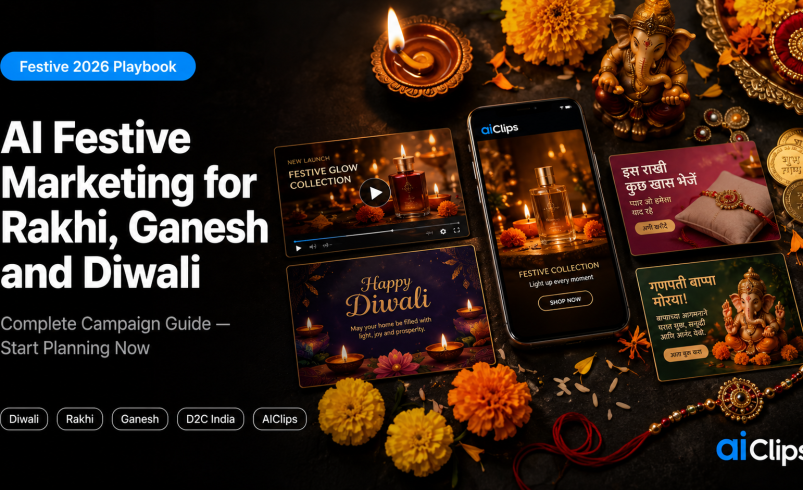

No market on earth gives brands what India does — a calendar where the celebrations barely stop. From Rakhi in late August to Diwali in November, the festive stretch is the single biggest revenue window of the year, and it rewards the brands that plan early. Festive marketing used to belong to whoever had the biggest production budget. AI has quietly flattened that, letting a solo creator or a small D2C brand produce festival-ready campaigns at a scale that used to need an agency. This guide is the complete playbook for 2026.
We are publishing this in June for a reason. The brands that win the festive season are already building for it now, months before the first diya is lit. By the time you are reacting to Diwali, they are collecting the sales. Let us make sure you are on the right side of that.
| The window | India has 20-plus nationally significant festivals across the year. The Rakhi-to-Diwali stretch, roughly late August to November, is the biggest. |
| The scale | Ecommerce in the 30–35 days before Diwali 2025 crossed ₹1.15 lakh crore, up 20–25% year on year — the strongest festive season in five years. |
| Key 2026 dates | Raksha Bandhan 28 Aug, Ganesh Chaturthi 14 Sep, Navratri from 11 Oct, Diwali around 8 Nov. |
| What wins | Emotion-led, gifting-focused, regional and vernacular content — not generic discounting. |
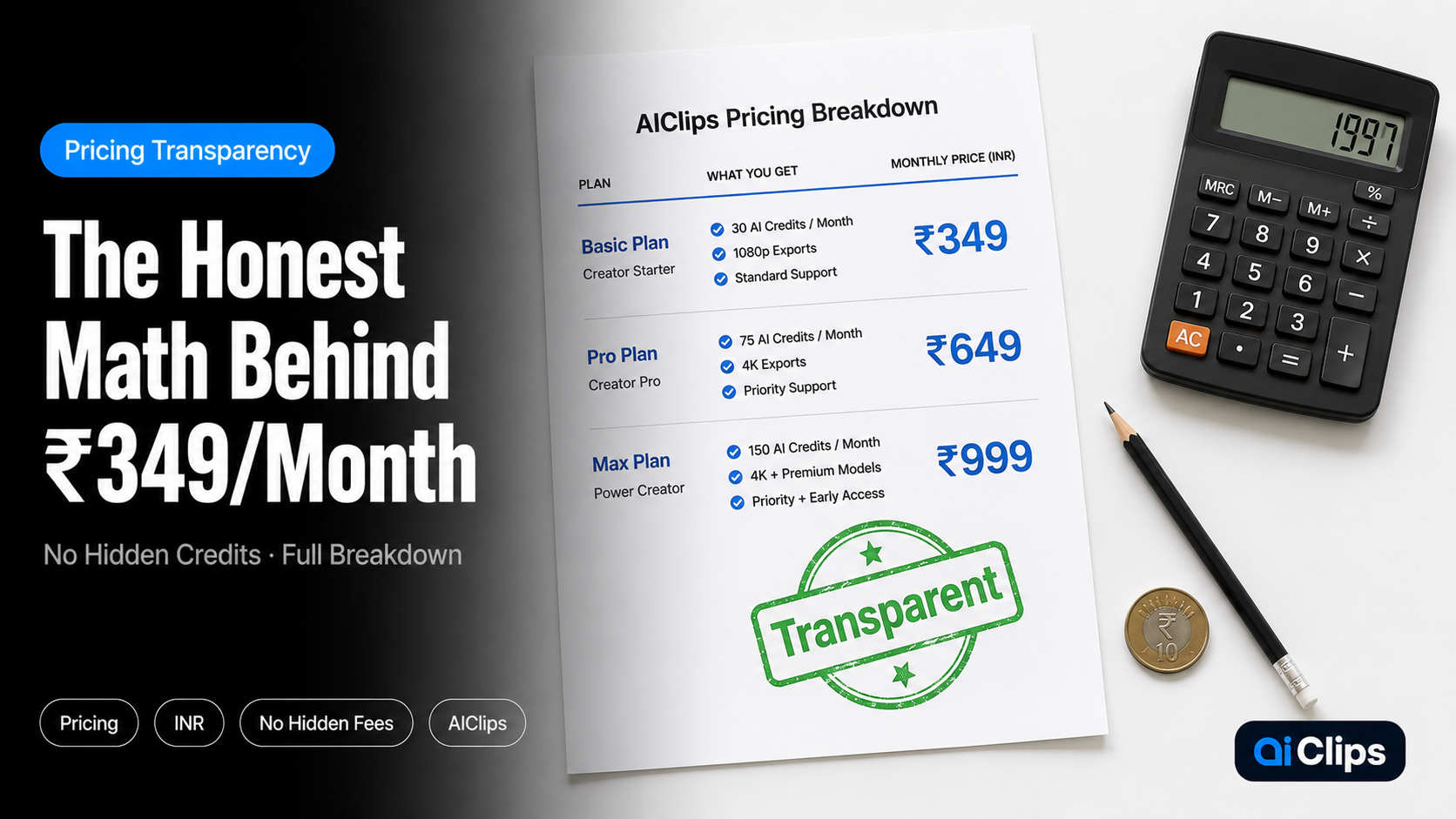
| AI’s role | Produce festive product shots, greeting videos, regional ads, and social creatives at scale, on AIClips from ₹349/month. |

Why the Festive Season Is India’s Biggest Opportunity
Most global markets hand brands one or two annual peaks for festive marketing. India hands them twenty. Each festival carries its own emotional register, its own gifting culture, and its own high-intent product categories. That is not a marketing cliché — it is a structural advantage that no other consumer market offers, and it is the reason festive marketing in India deserves to be treated as a year-round discipline rather than a single November scramble.
The numbers make the case on their own. In the 30 to 35 days leading up to Diwali 2025, Indian ecommerce crossed ₹1.15 lakh crore in gross merchandise value, growing 20 to 25% year on year — the strongest festive performance in five years, according to Redseer. And this was not one big day. Around 90 million shoppers participated in just the first 11 days of the festive sales window, with an average spend of close to ₹7,000 per shopper. Demand at that scale, concentrated into a few weeks, is the definition of an opportunity.
Here is the part that matters for a small brand. Each of those festivals is a purchase-intent event in its own right, not merely a moment to post a greeting. Diwali drives home decor and gifting. Raksha Bandhan drives jewellery and accessories. Navratri drives fashion and ethnic wear. A shopper searching for a Rakhi gift is not browsing — they are buying. If your product and your creative are in front of them at that moment, in a way that feels made for the occasion, you convert. The brands that miss this treat the whole season as one Diwali campaign and leave most of the year’s intent on the table.
The 2026 Festive Calendar: Know Your Dates
You cannot plan festive marketing you have not mapped. Here are the festivals that matter most for commerce in the second half of 2026, with the category and the emotional register each one pulls on. Dates follow the lunar calendar and can shift by a day or two regionally, so confirm against a current panchang before you lock a campaign.
| Festival | 2026 date | Top categories | Emotion |
|---|---|---|---|
| Onam | 26 August | Apparel, home, food | Harvest, homecoming |
| Raksha Bandhan | 28 August | Jewellery, accessories, gifting | Sibling love, protection |
| Janmashtami | 4 September | Devotional, sweets, apparel | Devotion, joy |
| Ganesh Chaturthi | 14 September | Home decor, pooja, sweets | Devotion, community |
| Navratri | from 11 October | Ethnic wear, fashion, beauty | Celebration, energy |
| Dussehra | ~20 October | Electronics, vehicles, big-ticket | Victory of good |
| Karva Chauth | late October | Jewellery, beauty, fashion | Love, devotion |
| Dhanteras | ~5 November | Gold, utensils, electronics | Prosperity, auspicious buying |
| Diwali | ~8 November | Gifting, decor, apparel, electronics | Prosperity, togetherness |
| Bhai Dooj | ~10 November | Sibling gifting | Sibling bond |
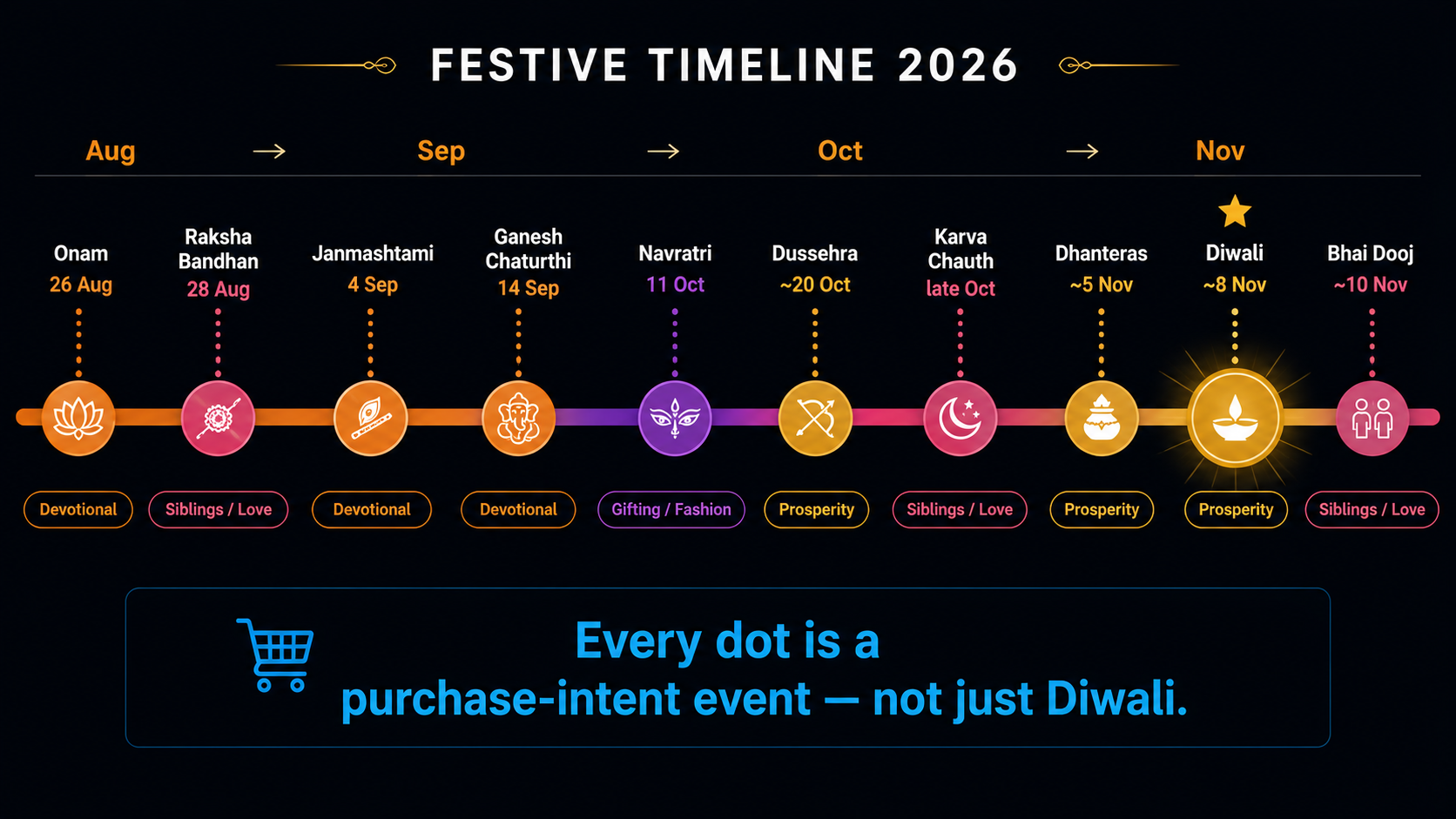
If you are a Maharashtra-based brand, Ganesh Chaturthi deserves special weight — the scale of celebration across the state makes it a commercial event on par with anywhere’s biggest holiday. Match your effort to where your audience actually is, rather than defaulting only to Diwali because it is the one everyone talks about.
The Festival-by-Festival Playbook
Generic festive marketing converts poorly because it belongs to no festival in particular. The brands that win tailor the message, the visuals, and even the product framing to each occasion. Here is how to think about the big ones.
Raksha Bandhan (28 August)
Rakhi is a gifting festival built around the sibling bond, and it skews to jewellery, accessories, personal-care hampers, and anything giftable. The winning creative leans into the emotion — a sister choosing the perfect gift, a brother’s reaction — rather than the discount. This is also the season’s first big test, so it is a good chance to learn what your audience responds to before the larger festivals arrive.
Ganesh Chaturthi (14 September)
Ten days of devotion and community, enormous in Maharashtra and increasingly nationwide. Categories run to home decor, pooja essentials, sweets, and eco-friendly products, since sustainability has become a real theme around idol immersion. Creative should be respectful and celebratory, never flippant. Content that honours the devotional spirit lands far better than content that treats a sacred festival as a mere sale trigger.
Navratri and Durga Puja (from 11 October)
Nine nights of colour, Garba, and Dandiya push fashion, ethnic wear, and beauty hard. This is a high-energy, high-visual festival, which makes it perfect for short-form video — outfit reveals, Garba-ready looks, colour-of-the-day content. If your brand touches apparel, jewellery, or cosmetics, Navratri is one of your biggest windows of the year.
Dhanteras and Diwali (early November)
The main event. Dhanteras kicks off the auspicious buying window for gold, utensils, and high-ticket electronics, and Diwali itself is the single largest ecommerce window in India — gifting, home decor, apparel, sweets, and electronics all peak. Diwali creative should feel warm, prosperous, and premium. This is where you spend your best production effort, because it is where the most money moves.
Why Timing Beats Everything
The most common festive marketing mistake is starting too late. By the time the season peaks, ad costs have climbed and your competitors have already captured the audience you are now paying a premium to reach. Winning brands invert this. They build audiences in the quieter months, grow their owned channels early, and activate at each intent window with content that is already made.
The strategic reason is cost. Festive CPMs rise sharply as everyone floods the same platforms in October and November. The brands that spent the earlier months building email lists, WhatsApp subscribers, and an engaged social following are far less dependent on that expensive paid reach when it matters. They can talk to an audience they already own. This is precisely why publishing and planning your festive marketing now, in the off-peak months, is worth more than a bigger budget later.
The practical takeaway: build your festive content bank across July, August, and September, so that when each festival arrives you are publishing, not scrambling to produce. This is exactly the kind of high-volume, repeatable production that AI has made accessible to brands without a studio.
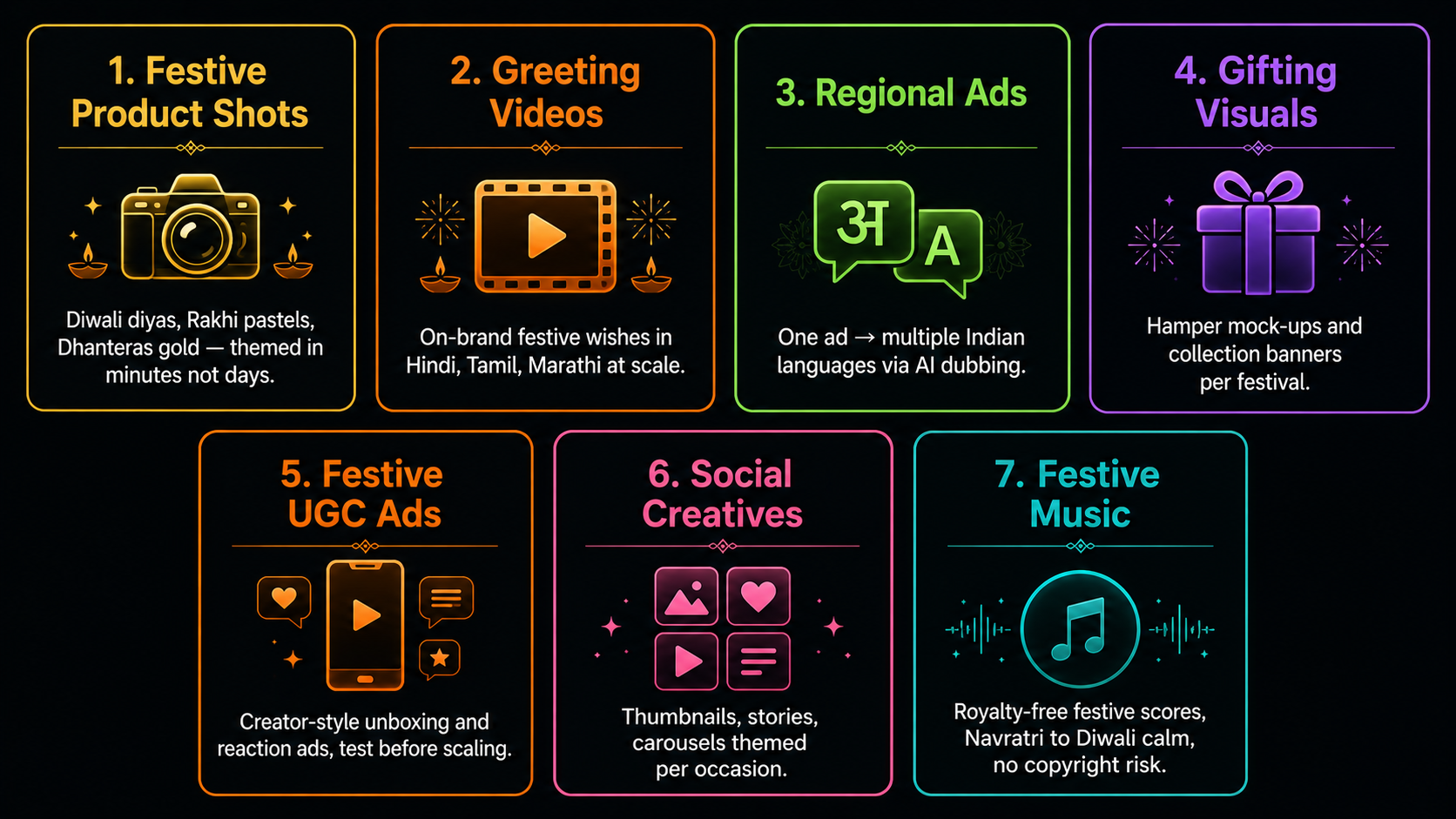
7 Ways to Use AI for Festive Campaigns
This is where festive marketing lets a small team compete with a big one. Each of these used to require photographers, editors, translators, or a video crew. Now they are an afternoon’s work.
1. Festive Product Shots VISUALS
Turn a plain phone photo of your product into a festive studio shot — diyas and marigolds for Diwali, rakhis and soft pastels for Raksha Bandhan, warm gold tones for Dhanteras. Instead of booking a shoot for every festival, you re-theme the same product for each occasion in minutes. Our ProductShot AI walkthrough covers the exact workflow for catalogue-ready images.
2. Personalised Greeting Videos at Scale VIDEO
Festive marketing wishes build goodwill and keep your brand top of mind, but filming them does not scale. AI lets you generate warm, on-brand greeting videos for each festival, and even produce regional variations, in a fraction of the time. A Diwali wish in Hindi, Tamil, and Marathi from the same base video reaches three audiences instead of one.
3. Regional and Vernacular Ads REACH
India’s festive shoppers respond strongly to content in their own language. AI dubbing and voiceover let you take one festive ad and produce it in several Indian languages without re-shooting or re-scripting. For a country where a single campaign can serve a dozen linguistic markets, this is the highest-leverage festive move available to a small brand.
4. Gifting Collection Visuals MERCHANDISING
Gifting is the emotional core of Indian festivals, and a well-presented gifting collection sells. Use AI to generate hamper mock-ups, gift-set arrangements, and themed collection banners for each festival, so your store looks curated for the occasion rather than generic all year round.
5. Festive UGC Ads PERFORMANCE
Creator-style video ads convert hard on social, and festive versions convert harder because they feel timely. Generate a batch of festive UGC-style ads — a customer-style unboxing of a Diwali gift, a Rakhi reaction — and test several hooks to find your winner before you scale spend. Just disclose AI use and keep any claims honest.
6. Festival Thumbnails and Social Creatives SOCIAL
Every festive post needs a thumbnail, a story, a carousel, a banner. AI image tools now render festive text and motifs cleanly, so you can produce a consistent set of social creatives for each occasion in one sitting, keeping your feed on-theme through the whole season.
7. Festive Background Music AUDIO
The right music sets the festive mood instantly, but licensed tracks are costly and risky. AI music generation lets you create original, royalty-free festive background scores that fit the tone of each occasion, from upbeat Navratri energy to warm Diwali calm, without a copyright worry.
What Actually Works (Beyond Discounts)
It is tempting to make every piece of festive marketing a discount. Resist it. Indian festive shoppers respond far more strongly to emotion-led storytelling, thoughtful gifting collections, and content in their own language than to another generic “flat 40% off” banner. Discounting is a blunt instrument that trains customers to wait for the next sale and erodes your margins in your highest-revenue window.
The patterns that consistently outperform share a few traits. They are emotional first — they tell a small story about the relationship the festival celebrates, whether that is siblings, family, or community. They are specific to the occasion rather than interchangeable across festivals. They are regional, speaking to the shopper’s language and cultural context. And they build on owned channels — email, WhatsApp, SMS, and an engaged social following — so the brand is not entirely at the mercy of rising festive ad costs.
Think of it this way. A discount answers the question “why buy now.” Emotion and occasion answer the question “why buy from you.” In a crowded festive feed where every brand is shouting about price, the one telling a genuine story about the moment is the one that gets remembered, and remembered brands get bought.
Your Festive Content Plan: A Simple Timeline
Here is how to turn all of this festive marketing into an actual schedule, starting from now. The principle is simple — produce ahead, publish on time.
| When | What to do |
|---|---|
| Now – July | Build your audience. Grow email and WhatsApp lists, plan your festival line-up, and start producing your festive content bank. |
| Early August | Finalise Raksha Bandhan and Onam creative. Product shots, greeting videos, and regional ads ready to schedule. |
| Mid August | Activate Rakhi and Onam campaigns. Learn what converts before the bigger festivals. |
| September | Run Ganesh Chaturthi, then prepare Navratri fashion and beauty creative in advance. |
| October | Activate Navratri and Dussehra. Begin building your Diwali campaign — your best production effort of the year. |
| Early November | Peak. Run Dhanteras and Diwali across every owned channel, with paid support on your proven winners. |
| Mid November | Extend into Bhai Dooj, then pivot to Black Friday for electronics and high-ticket categories. |
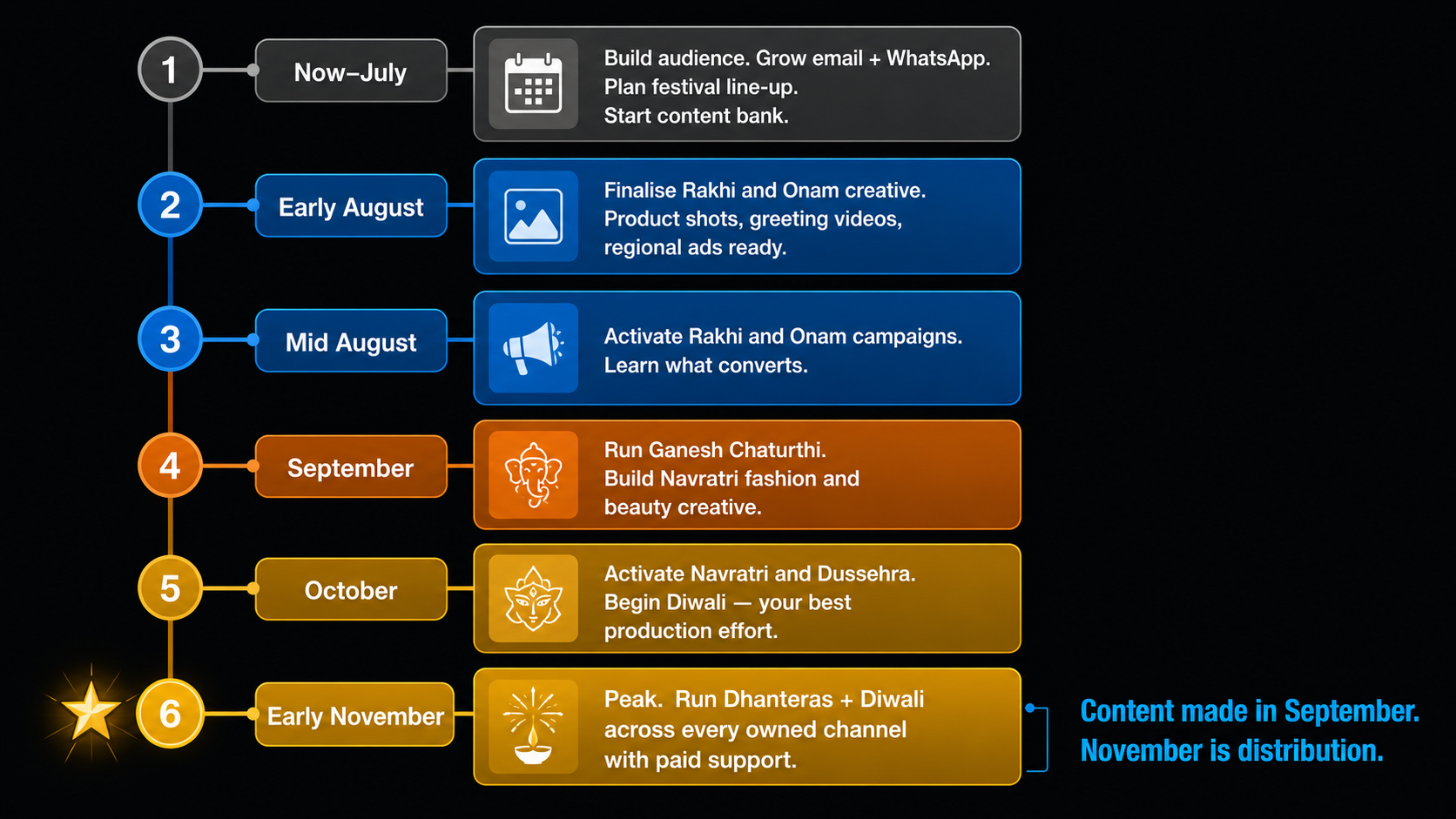
Notice how much of the work happens before the festival, not during it. That is the entire secret. When your Diwali content was made in September, November becomes about distribution and optimisation rather than panicked production. AI is what makes producing this much content ahead of time realistic for a team of one or two.
5 Festive Marketing Mistakes to Avoid
Knowing what wins is only half of it. Most festive marketing underperforms not because the idea was bad, but because of a handful of avoidable errors. Here are the ones that quietly cost brands the most.
- Treating the season as one Diwali campaign. The single biggest festive marketing mistake in India is ignoring the arc. Rakhi, Ganesh Chaturthi, and Navratri are each a purchase-intent event, and skipping them leaves most of the season’s revenue untouched.
- Leading with discounts. Price-only creative trains customers to wait and destroys margin in your best window. Emotion and occasion should come first, with any offer as support, not the headline.
- Publishing only in English. A huge share of festive shoppers respond to their own language. English-only festive marketing leaves regional audiences cold, and regional content is now cheap to produce with AI dubbing.
- Starting too late. Reactive brands pay peak ad costs for an audience their competitors already built. Every week of early preparation lowers your cost and raises your reach.
- Being tone-deaf. Festivals carry real meaning. Content that gets a cultural detail wrong or treats a sacred occasion carelessly does lasting damage to a brand, however clever the discount behind it.
Every one of these is a planning problem, not a budget problem, which is good news. A small brand that plans its festive marketing well beats a bigger one that throws money at a late, generic campaign.
How to Measure Your Festive Marketing
A festive season you cannot measure is a festive season you cannot improve next year. Keep the metrics simple and per-festival, so you learn which occasions actually move your product rather than lumping the whole quarter together.
Track four things. First, revenue and orders by festival, so you know whether Rakhi or Diwali is really your window. Second, owned-channel growth — how many email and WhatsApp subscribers you added before peak, since that reduces next year’s dependence on paid reach. Third, the performance of each creative variation, so your winning festive marketing angles carry into future seasons. And fourth, repeat purchase rate, because the real prize is turning a festive buyer into a year-round customer. Treat every festive season as data for the next one, and your results compound year after year.
Do It All on AIClips
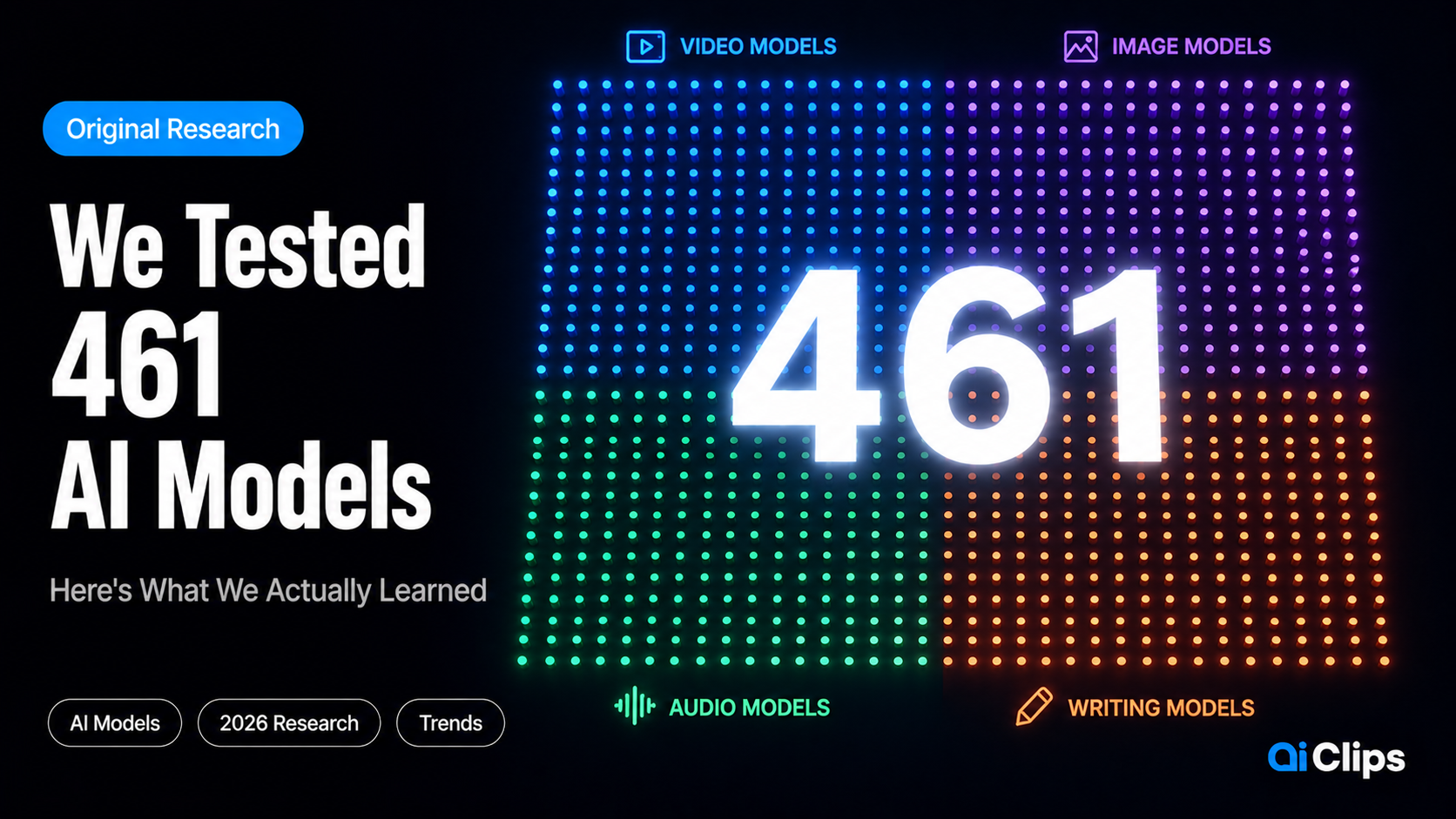
The reason this whole festive marketing playbook is realistic for a small brand is that the production no longer needs a studio, a translator, and five separate subscriptions. On AIClips you can generate festive product shots, greeting and ad videos, regional voiceovers and dubbing, thumbnails, and background music — across 461 models, in one dashboard, billed in rupees at ₹349/month with UPI. You bring the festival calendar and the brand story; the platform handles the production at the volume the season demands. For the image side of festive creative, our AI image generator guide is a good next read.
Frequently Asked Questions
When should I start festive marketing in India?
What are the key festive dates for 2026?
How can a small brand compete during the festive season?
Does festive marketing have to mean discounts?
How do I make festive content in regional languages?
What does festive content cost to produce with AI?
Build Your Festive Campaigns on AIClips
Product shots, videos, regional ads, and music for every festival, in one dashboard. INR pricing, UPI, from ₹349/month.
Start on AIClips →