
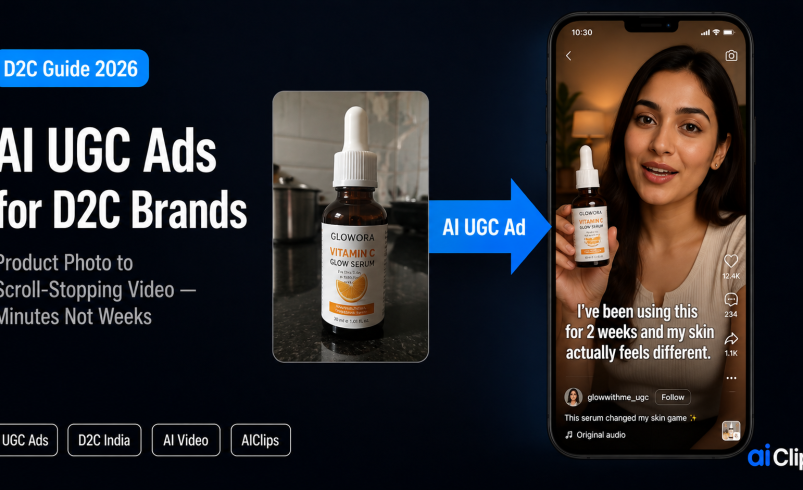

Every D2C founder knows UGC ads convert better than polished brand films. The problem was always production — hiring creators, shipping product, waiting weeks, paying ₹15,000 to ₹1.5 lakh per campaign. AI UGC ads remove that bottleneck. You upload a product photo, pick a creator-style avatar, and ship a video that looks like a real person filmed it, in minutes instead of weeks.
This guide covers what AI UGC ads are, how to make one step by step, the formats that actually convert, and the disclosure rule Indian brands cannot ignore.
| What it is | UGC-style video ads built by AI — an avatar, a voice, and your product, made to look like a real customer filmed it on a phone. |
| Why D2C loves it | UGC outperforms polished brand ads on social, but real creators are slow and costly. AI produces dozens of variations in an afternoon. |
| The cost shift | Traditional UGC runs ₹15,000–₹1.5 lakh for 20 videos. AI does the same volume for a fraction, with no shoots or shipping. |
| The rule | AI avatars are not real customers. Disclose AI use and never fake testimonials or results — India’s ASCI rules apply. |
| On AIClips | Avatars, voiceovers, video, and captions in one place, ₹349/month with UPI. |
What AI UGC Ads Actually Are
AI UGC ads are videos that look and feel like a real customer made them, but are produced by AI rather than filmed by a creator. The technology stack is three parts: an AI avatar that delivers your script with natural expressions, a synthetic voice that sounds human rather than robotic, and automated video that adds product shots, captions, and transitions.
Worth being precise here. A real UGC ad is filmed by an actual customer. An AI UGC ad only looks like that — the creator, voice, and scene are generated. Both hit the same trust signal in the feed, which is why brands now run a mix of both. The AI version exists to solve one thing: the production capacity that stops most teams from testing creative at the volume paid social demands.
Why D2C Brands Are Switching
The performance edge of UGC is old news. Authentic, creator-style content tends to beat polished brand creative on click-through rate and cost-per-click. What changed is the economics of making it.
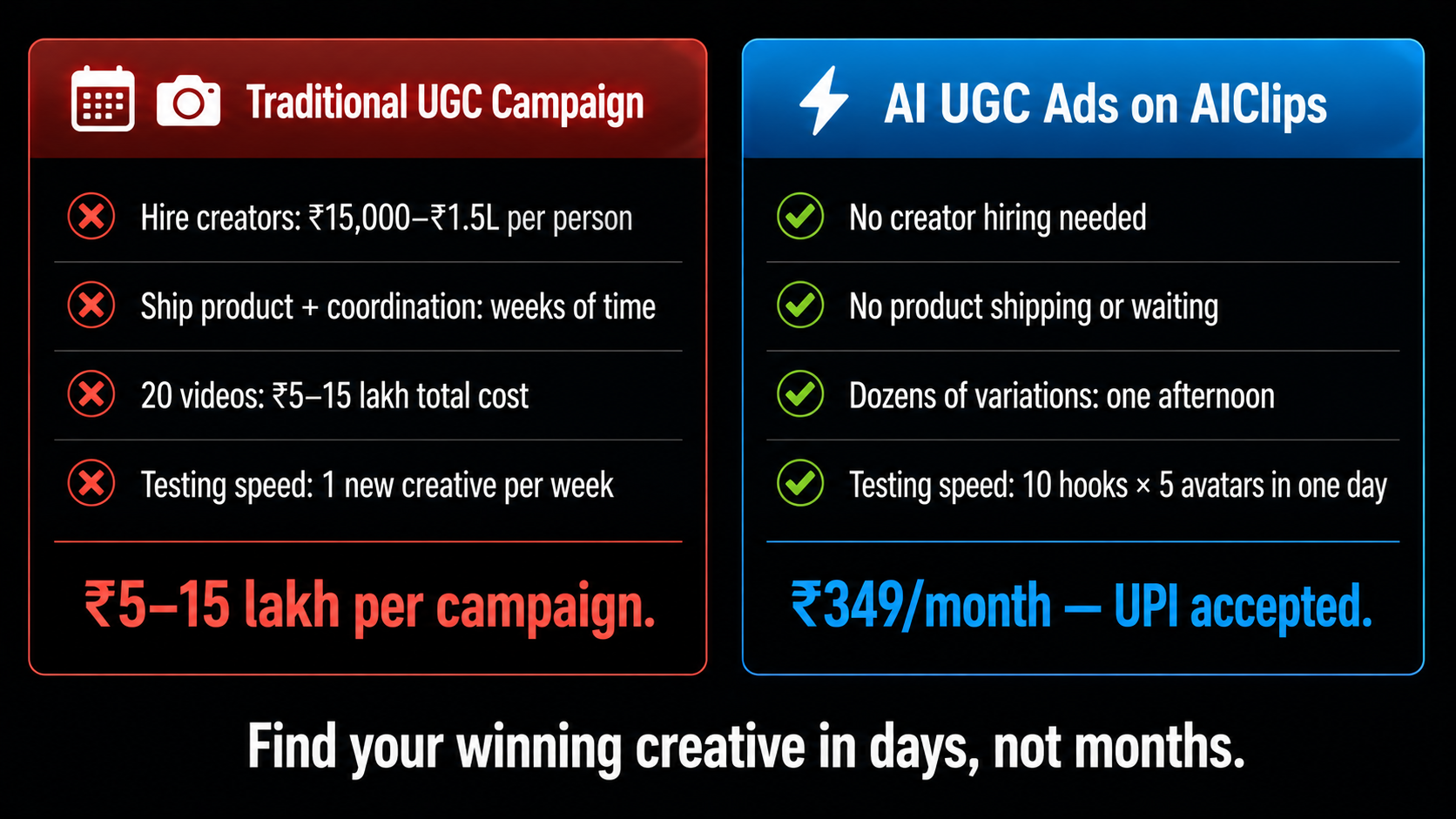
Hiring a creator for UGC runs anywhere from a few thousand rupees to over a lakh per person, before product and shipping. Producing 20 traditional UGC videos could easily cost ₹5–15 lakh once you count the time spent managing it all. AI UGC ads collapse that. You generate dozens of variations — different hooks, avatars, angles, and calls to action — in a single afternoon, then test more creative in a week than most teams test in a quarter.
How to Make an AI UGC Ad, Step by Step
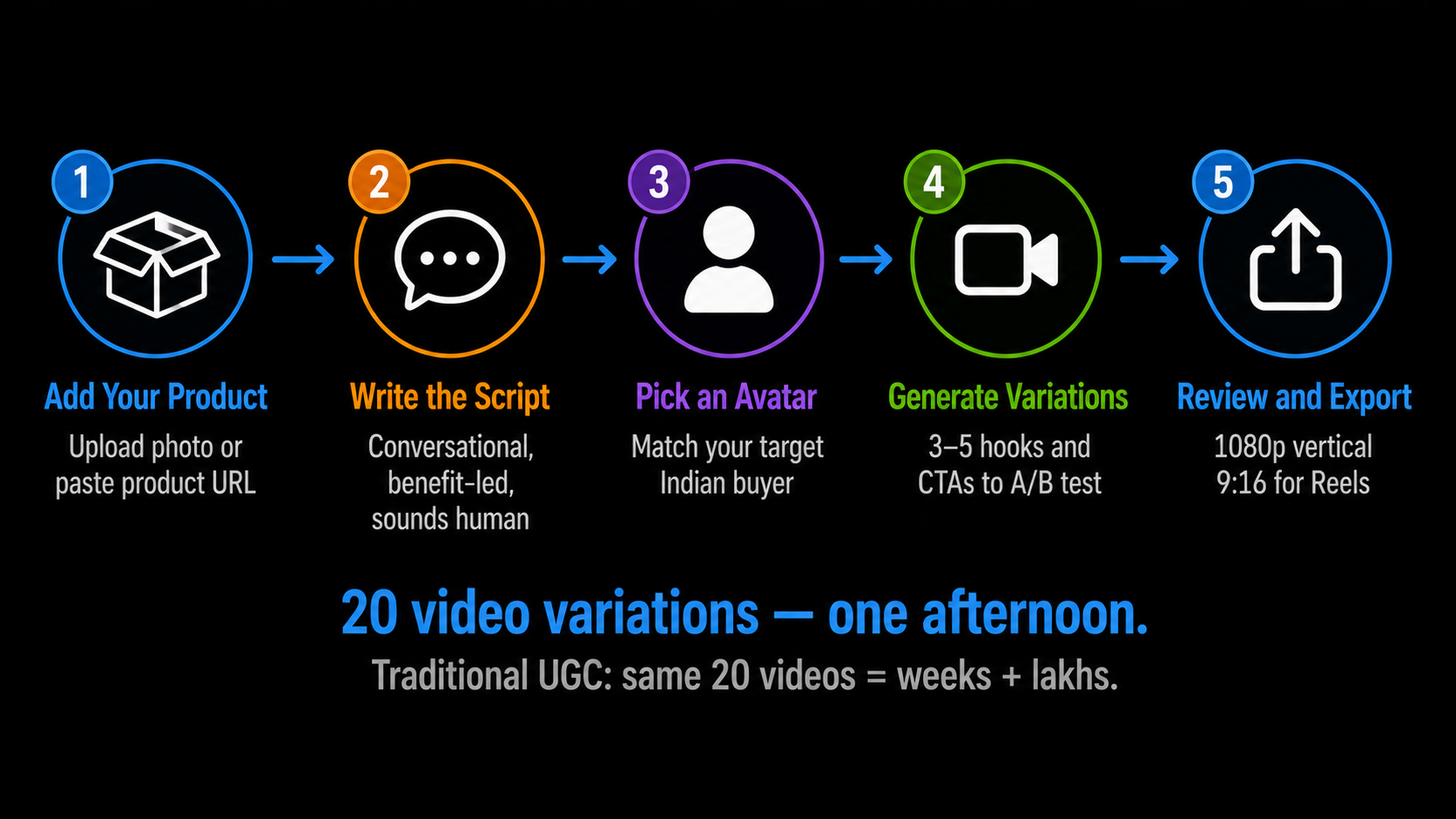
1. Add Your Product START
Upload a product photo or paste your product page URL. The AI pulls the key details — name, features, benefits — so it has something accurate to talk about. A clean product shot helps; if yours is rough, our ProductShot guide below fixes that first.
2. Write a Script That Sounds Human SCRIPT
Keep it conversational, the way a real customer talks. Lead with a problem or a benefit, not a feature list. “I’ve been using this for two weeks and my skin actually feels different” beats “contains 2% niacinamide.” Generate a draft, then edit it to sound like a person.
3. Pick an Avatar That Fits Your Buyer CASTING
Choose a creator-style avatar that matches your target audience — age, look, and tone. The closer the avatar feels to your actual customer, the more the ad lands. For Indian D2C, an avatar your buyer recognises as one of their own outperforms a generic one.
4. Generate and Make Variations PRODUCE
The AI builds the video — avatar delivering the script, product shots, captions, music. Then generate three to five variations with different hooks and CTAs. This batch is what you will A/B test, so do not stop at one.
5. Review and Export for the Platform SHIP
Watch each variation, fix anything that feels off, and export at 1080p vertical (9:16) for Reels, Shorts, and TikTok. Ready-to-run files, no editing suite needed.
The 6 UGC Ad Formats That Convert
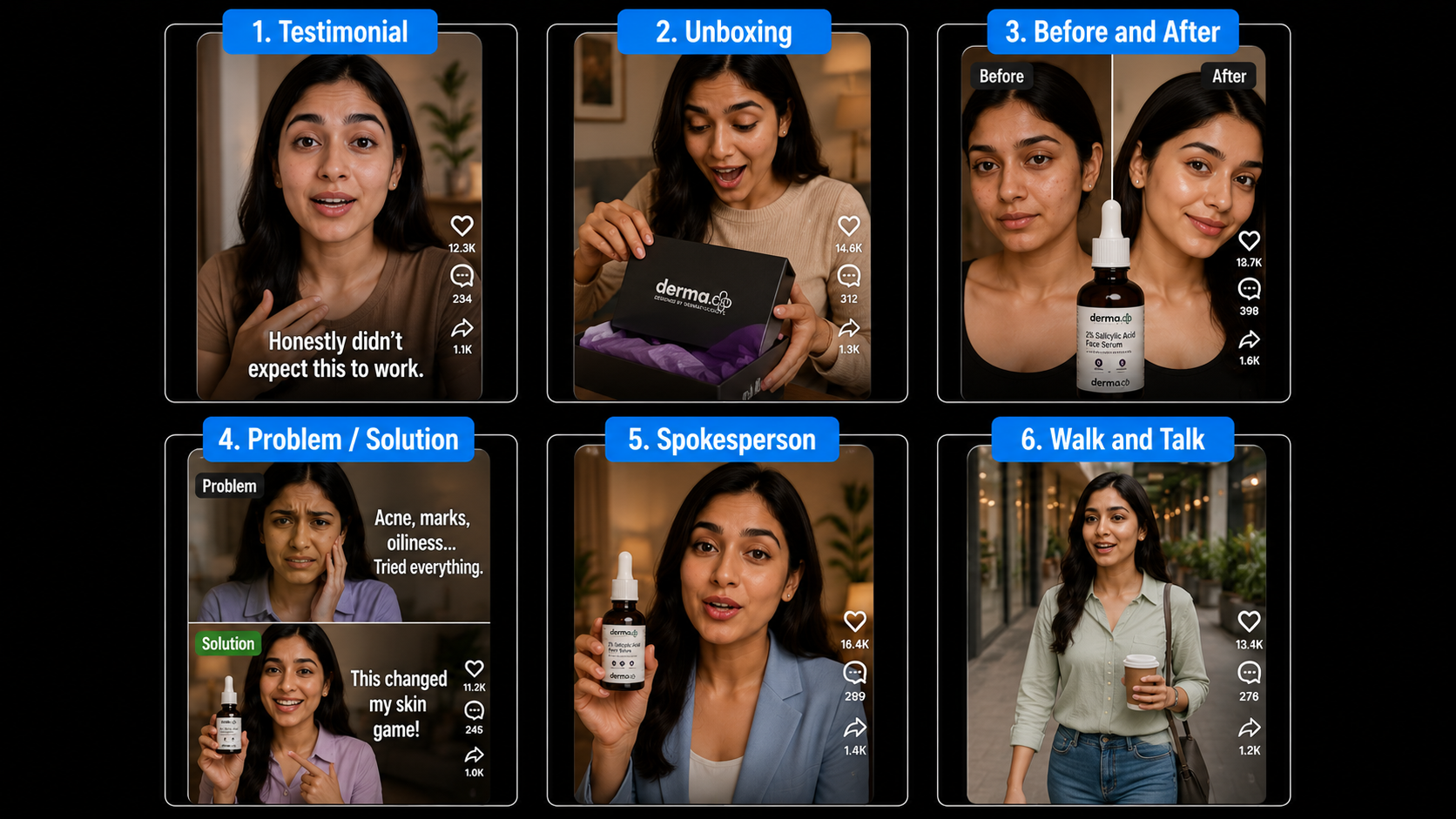
There is no single UGC format. Each one suits a different stage of the funnel and a different buyer mindset. These six are the workhorses.
| Format | What it does | Best for |
|---|---|---|
| Testimonial | Avatar shares a personal experience | Trust and social proof |
| Unboxing | Avatar opens and reacts to the product | New launches, excitement |
| Before / after | Split or transition showing results | Skincare, fitness, home |
| Problem / solution | Names a pain, then the fix | Cold audiences, top of funnel |
| Spokesperson | Direct, confident product pitch | Clear offers and deals |
| Walk-and-talk | Casual, on-the-move delivery | Lifestyle and relatability |
What Makes a UGC Ad Actually Work
The tool does the production. These habits decide whether the ad converts.
- The hook is everything. If the first two to three seconds do not stop the scroll, nothing else matters. Test multiple hooks.
- Specific beats vague. “Saves three hours a week” outperforms “saves time.” Real numbers feel real.
- Show, do not just tell. A clip of the product in use is worth more than describing it.
- Bold captions, always. Most paid social is watched on mute, so on-screen text is not optional.
- Keep it short. Thirty to forty-five seconds is the sweet spot for paid social.
Stay Honest: The Disclosure Rule
This is the part that protects your brand, so do not skip it. AI avatars are not real customers, and presenting a generated testimonial as a genuine one crosses a line that gets ads pulled and trust broken.
What This Costs in India
The cost gap is the whole reason this category exists. Here is the honest comparison for a D2C brand.
| Option | Cost | Notes |
|---|---|---|
| Hiring creators | ₹5–15 lakh for 20 videos | Plus product, shipping, and weeks of coordination |
| AIClips Creator | ₹349 / month | Avatars, voice, video, captions in one place, UPI |
| Separate UGC tools | $19–60 / month each | Per-tool, dollar billing, foreign card fees |
Producing your product visuals matters as much as the avatar. If your product photos are not ad-ready, start with our phone snap to studio product shot guide, then build the ad around them. For the video models behind it all, see our best AI video generators guide.
Frequently Asked Questions
What are AI UGC ads?
Do AI UGC ads convert as well as real UGC?
Do I have to disclose that an ad uses an AI avatar?
How many AI UGC ad variations should I make?
Can I make AI UGC ads in Hindi and regional languages?
Make Your First AI UGC Ad on AIClips
Avatars, voice, video, and captions in one dashboard. INR pricing, UPI, from ₹349/month.
Start on AIClips →