


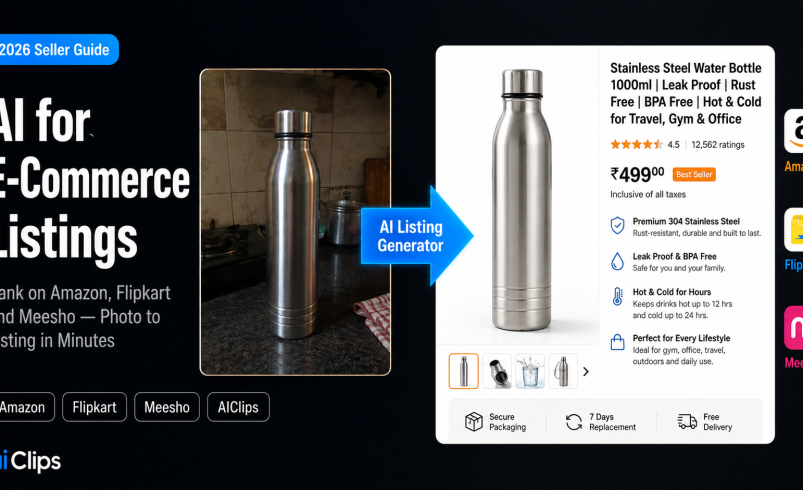

On any Indian marketplace, a thousand sellers are offering the same product you are. The one who sells is rarely the one with the best product — it is the one with the best product listing. In 2026, AI has changed who can win that fight. You can upload a product photo and get back a ready-to-rank title, bullet points, description, and keywords in minutes, work that used to take a copywriter and a photographer. This guide shows how to build a product listing that ranks on Amazon, Flipkart, and Meesho, and where you still have to be careful.
I will flag the traps up front, because two of them cost sellers real money: never trust an AI’s HSN or GST suggestion without checking it, and never let AI stuff your listing with keywords, which marketplaces punish. Used with those guardrails, AI is the fastest way a small seller has ever had to compete with big brands.
| What AI does | Turns a product photo into a title, bullets, description, backend keywords, attributes, and an HSN suggestion in minutes. |
| Why it matters | Marketplaces rank by keywords, click-through, and conversion. A poor listing gets impressions but no sales. |
| Images too | AI handles white-background shots, lifestyle scenes, infographics, and resizing to each platform’s specs. |
| The catches | Verify every HSN and GST detail, never keyword-stuff, and make sure images match the real product. |
| India edge | On Meesho, smaller image files fit cheaper shipping slabs — a direct margin win most sellers miss. |
Why Your Listing Decides Everything
Marketplace algorithms are not mysterious. They rank products on keyword relevance, click-through rate, conversion rate, and customer-satisfaction signals like ratings and returns. Get those right in your product listing and you rise; get them wrong and you sink, regardless of how good the product is. The clearest symptom of a weak product listing is impressions without sales — plenty of people see it, almost nobody buys.
This matters more in India than almost anywhere, because so many sellers list the identical item sourced from the same wholesaler. When the product is a commodity, the listing is your only real differentiator. A sharp title, honest images, and bullets that answer a buyer’s doubts are what separate the seller who moves stock from the ten who do not. That is precisely the gap AI now lets a small seller close in an afternoon.
What AI Does for a Product Listing
The modern product listing workflow is almost startlingly quick. You upload one or two product photos, add any facts you already know, and the AI generates a full, marketplace-ready product listing: an SEO title, bullet features, a description, backend keyword tags, catalogue attributes, and even a suggested HSN code and price. It tailors the output to whichever platform you pick, since Amazon, Flipkart, and Meesho each want different things.
It does not stop at words. AI listing tools also handle the visuals — removing backgrounds for clean white-background shots, generating lifestyle scenes, building infographic images that call out features, and resizing everything to each marketplace’s exact specifications. For sellers with large catalogues, the same tools can generate hundreds of listings from a single spreadsheet, and some even analyse your existing reviews to find the objections your product listing should be answering. A few tools built on Google’s Vertex AI and Gemini models now process tens of thousands of SKUs a month, which used to need a whole cataloguing team and now runs on a single affordable subscription.
Anatomy of a Listing That Ranks and Sells
AI gives you the raw material, but you should know what a strong product listing is actually made of, so you can judge and sharpen what it produces.
| Element | What good looks like |
|---|---|
| Title | Brand + main keyword + key feature + size or quantity, within the platform’s character limit |
| Bullets | Answer the buyer’s top questions and objections, one benefit per line |
| Description | Persuasive, scannable, keyword-rich but written for humans |
| Backend keywords | All the search terms buyers use, without stuffing them into visible text |
| Images | Clean main shot, lifestyle context, and an infographic — all accurate to the product |
| Proof | Ratings and reviews, plus A+ content where the platform allows it |
The title example that sticks with sellers says it all: “Men’s Cotton Casual Blue Shirt Full Sleeve” beats “Blue Shirt” every time, because it matches how people actually search. AI is excellent at building titles like that, as long as you keep them readable rather than a wall of keywords.
Before and After: A Quick Example
It helps to see the difference in practice. Take a seller listing a steel water bottle, one of the most crowded categories on any Indian marketplace.
The weak version has the title “Steel Water Bottle”, a single dim photo shot on a kitchen counter, two vague bullets, and no keywords. It gets impressions because the category is searched constantly, but almost no clicks, because it looks like every other tired listing on the page and answers none of a buyer’s real questions before they scroll past.
The AI-assisted version turns that same bottle into a proper product listing: the title becomes “Stainless Steel Insulated Water Bottle 1 Litre, Leak-Proof, Hot & Cold 24 Hours”, the main image is a clean white-background shot, a second image shows it in a gym bag, and an infographic calls out the insulation and capacity.
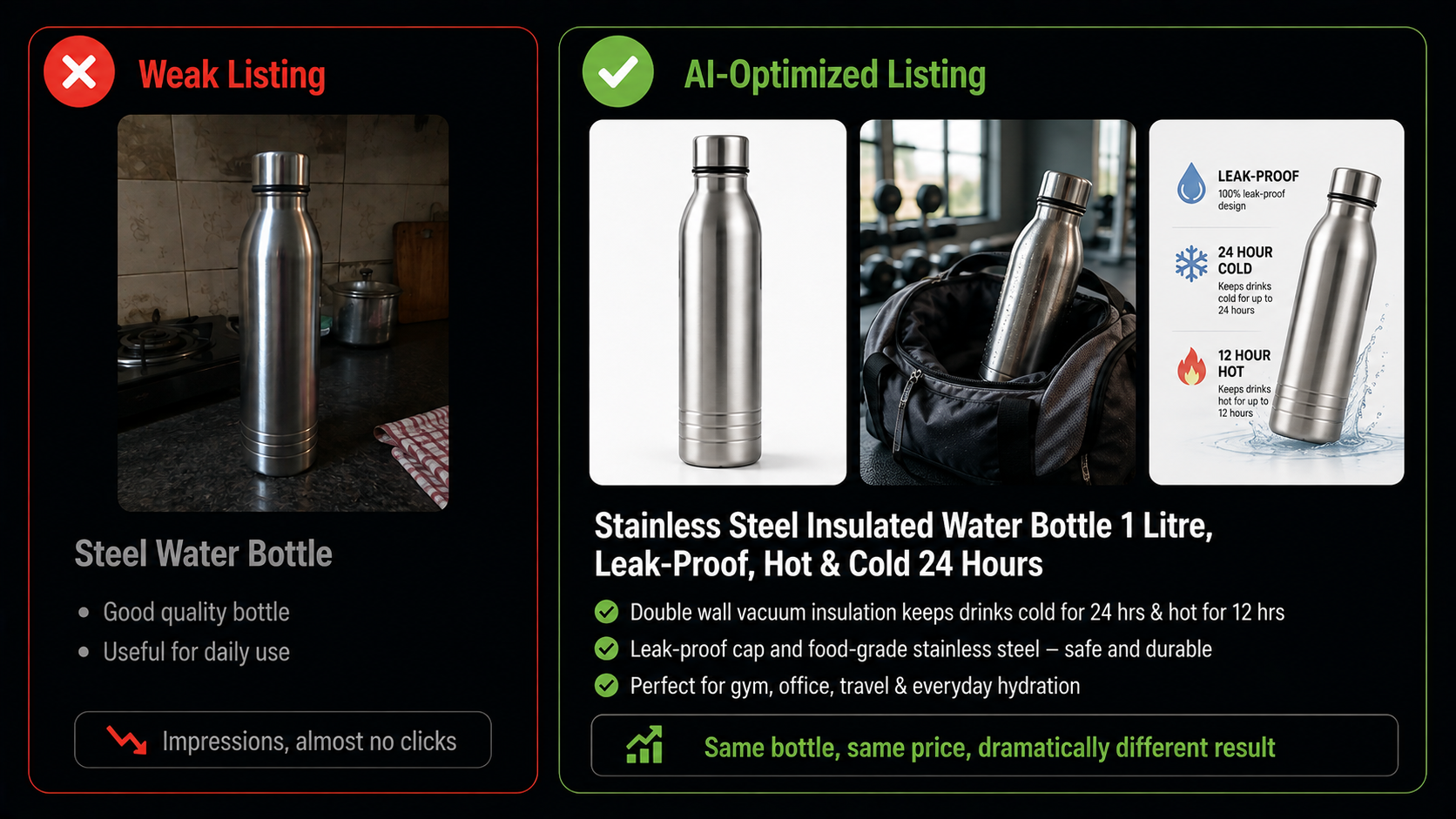
The bullets answer the real doubts — does it leak, how long does it stay cold, is it BPA-free — and the backend carries the search terms buyers actually use. Same bottle, same price, but a dramatically different result on the shelf. That is the entire promise of AI here: not a better product, but a product listing that finally does the product justice, built in an afternoon instead of a week.
How to Create an AI Listing, Step by Step
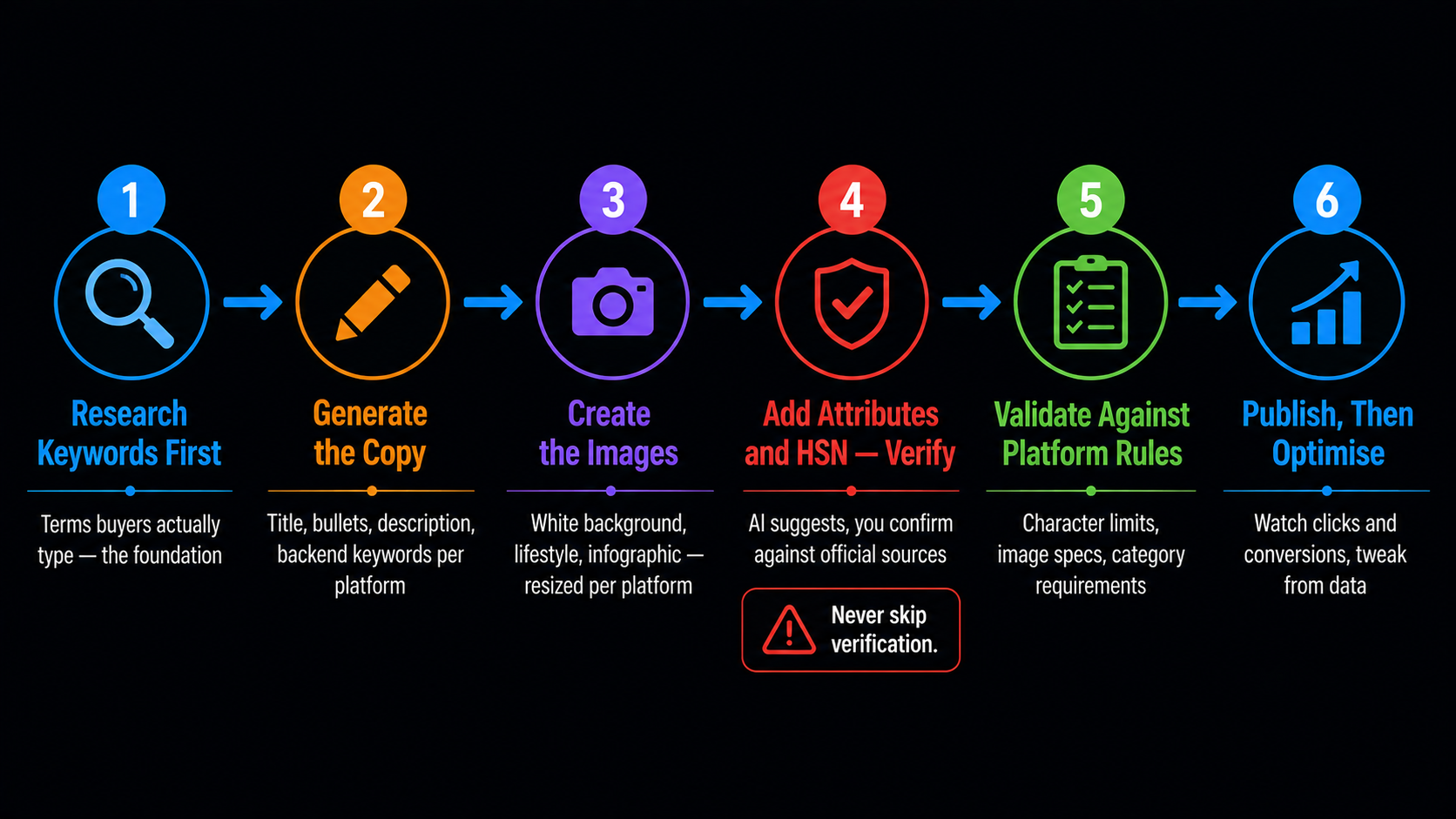
1. Research Keywords First RESEARCH
Before generating anything, find the terms buyers actually type. AI keyword tools build marketplace-specific clusters and long-tail phrases. This is the foundation your whole product listing is built on, so do not skip it.
2. Generate the Copy WRITE
Feed your photo and known facts to a listing generator and produce the title, bullets, description, and backend keywords. Pick the platform first, since the format differs, then refine the draft with real product specifics only you know.
3. Create the Images VISUALS
Produce a clean white-background main image, a lifestyle scene, and an infographic highlighting key features. Resize each to the platform’s specs. Strong images lift click-through more than almost anything else in your product listing.
4. Add Attributes and HSN — Then Verify CHECK
Fill in catalogue attributes and the HSN code. AI suggests these, but they are best-effort guesses. Verify the HSN and any tax detail against official sources before you rely on it, because getting GST wrong is expensive.
5. Validate Against Platform Rules COMPLY
Check character limits, image dimensions, and category requirements before publishing. Some tools now validate a listing against current marketplace guidelines automatically, which saves a rejected upload and a wasted day.
6. Publish, Then Optimise from Data IMPROVE
A product listing is never finished. Once it is live, watch clicks and conversions, then adjust the title, images, or price on the listings that underperform. Small, data-led tweaks compound into real ranking gains.
The Platforms Are Not the Same
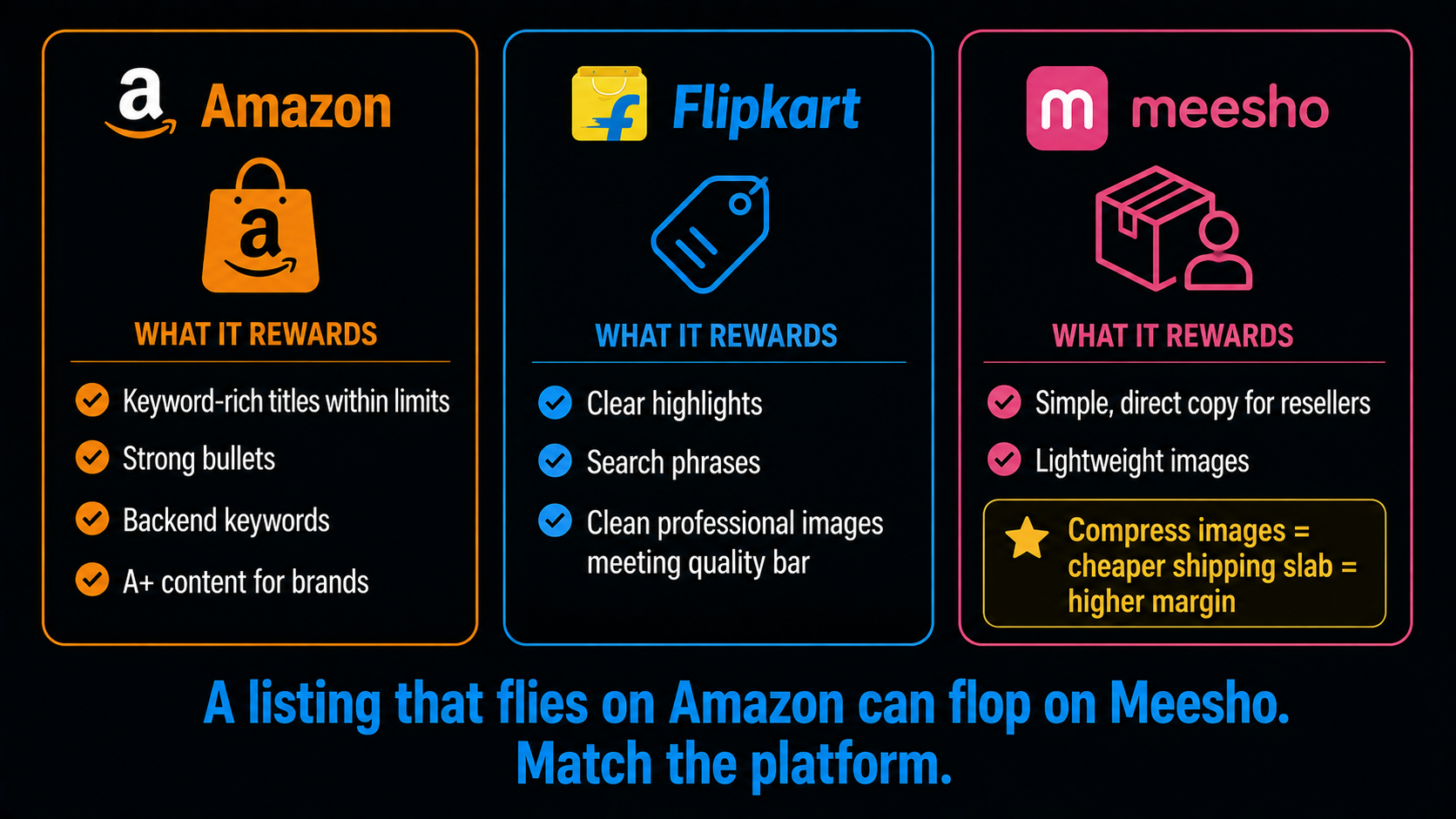
A listing that flies on Amazon can flop on Meesho, because each marketplace rewards different things. Match your output to the platform.
| Platform | What it rewards |
|---|---|
| Amazon | Keyword-rich titles within limits, strong bullets, backend keywords, and A+ content for brands |
| Flipkart | Clear highlights, search phrases, and clean professional images that meet its quality bar |
| Meesho | Simple, direct copy for resellers, and lightweight images that fit cheaper shipping slabs |
The Honest Limits
The India-Specific Wins
Beyond the Meesho shipping trick, a few things make AI listings especially valuable for Indian sellers. The compliance load is real — sellers report losing four to six hours a week on GST, invoices, and margin maths — and AI tools built for India now automate much of that around the listing itself. Quick commerce is the new frontier too: Blinkit, Zepto, and Instamart reward the same optimised, structured product listing thinking, so the skill transfers as you expand. And because so many Indian listings are still weak and generic, a seller whose product listing is done well stands out fast.
There is also the multilingual and regional angle. As marketplaces and buyers span every corner of the country, being able to generate clear, correct listings and visuals quickly, at scale, is what lets a two-person operation list like a team of twenty. For the visual half of that, our product shot guide goes deep on turning a phone photo into a listing-ready image.
5 Listing Mistakes That Kill Sales
Even with AI doing the heavy lifting, the same avoidable errors sink sellers again and again. Check your product listing against these before you publish.
- A vague title. “Blue Shirt” is invisible in search. Pack the title with the words buyers actually type, kept readable.
- Keyword stuffing. Cramming search terms into the visible copy gets a product listing suppressed. Keep extra keywords in the backend fields.
- Weak or misleading images. A dim photo loses the click; a misleading one drives returns and wrecks your rating. Clean, accurate images only.
- Ignoring reviews. Your reviews list the exact objections your bullets should answer. Skipping them leaves conversions on the table.
- Publish and forget. A product listing is a living thing. Sellers who never revisit underperformers lose to those who tweak from the data.
None of these need a big budget to fix. They need a few minutes of attention on top of what the AI produces, which is exactly the human layer that turns a decent draft into a listing that actually sells.
Where AIClips Fits
Let me be precise about our lane, because it is a specific and honest one. AIClips is not a listing-copy generator, a keyword tool, or a marketplace uploader — for the title, bullets, backend keywords, and HSN suggestions, use a dedicated Indian listing tool built for that job.
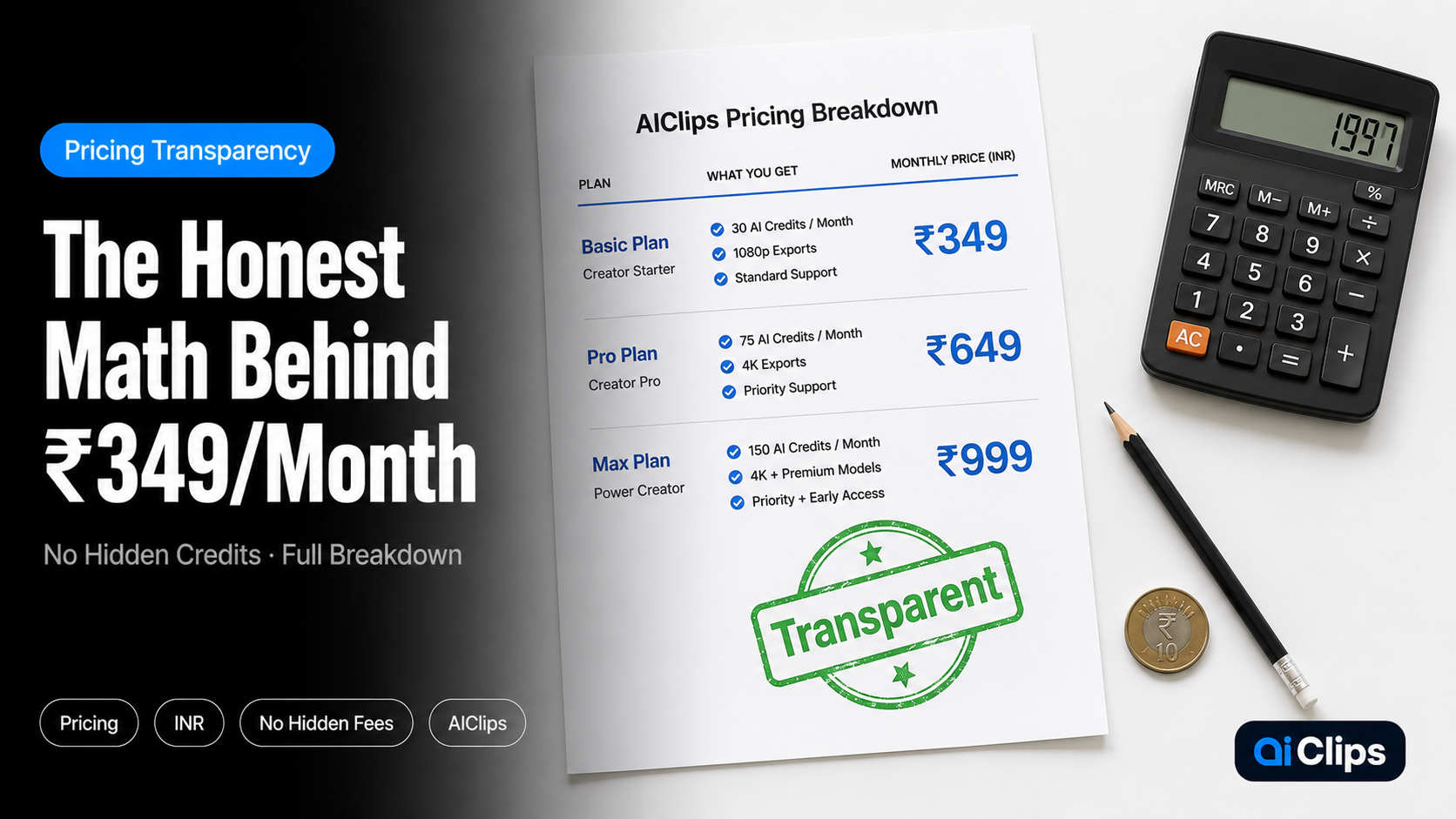
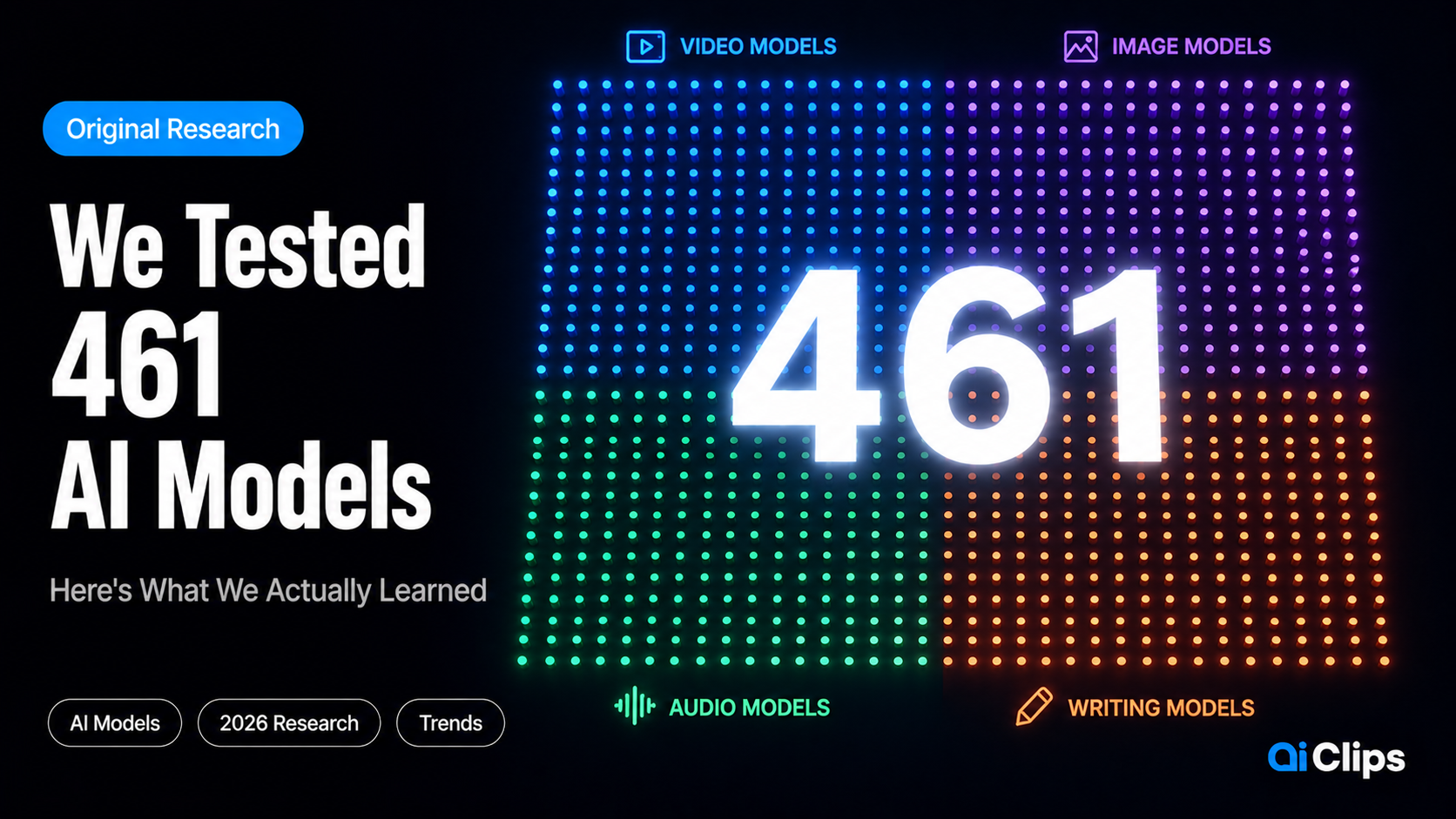
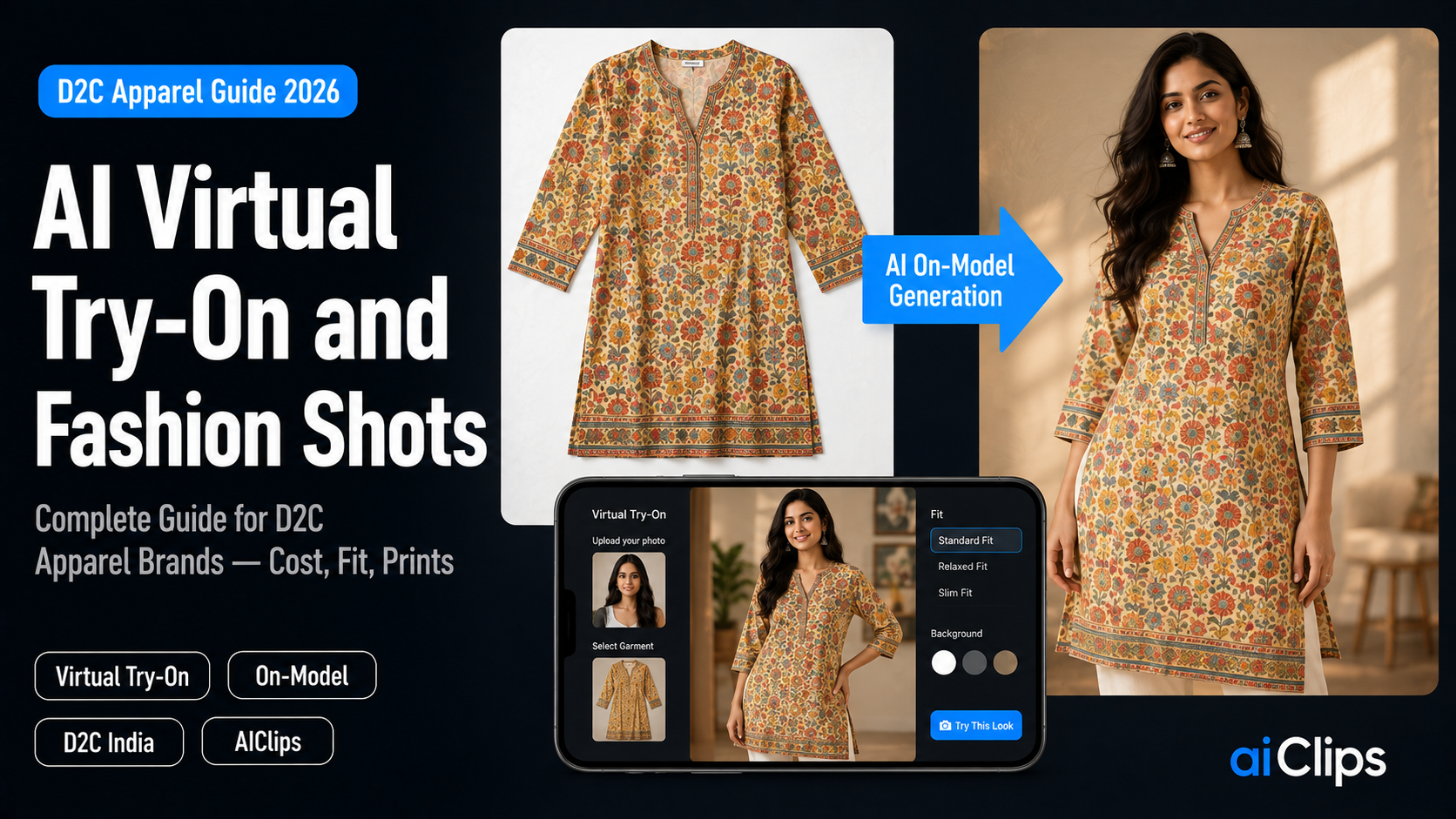
Where AIClips earns its place is the visual side of your product listing: clean white-background product shots, lifestyle scenes, infographic-style feature images, and short product videos for your listings and ads, across 461 models in one dashboard at ₹349/month with UPI. So generate your copy in a listing tool, generate your images and video on AIClips, and you have a complete, professional listing without a studio or an agency. Our AI image generator guide covers that image side in more detail.
The Bottom Line
AI has quietly levelled the marketplace. A solo seller can now produce a product listing that looks and reads as professionally as a brand with a full catalogue team, in a fraction of the time and cost. The tools write the copy, build the images, and suggest the structure; you supply the real product knowledge, verify the compliance details, and keep improving from the data.
Get the guardrails right — verify HSN and GST, never keyword-stuff, keep images honest — and a strong AI-built product listing is the single highest-leverage thing a small Indian seller can invest an afternoon in. In a market where a thousand sellers share your product, the listing is how you win.
Frequently Asked Questions
Can AI really write my product listings?
Are there free AI product listing tools for India?
Will AI-written listings get my products ranked?
Should I trust the HSN code AI suggests?
How is a Meesho listing different from Amazon?
Can AIClips create my listings?
Create Listing Images & Video on AIClips
White-background shots, lifestyle scenes, infographics, and product videos for your listings — 461 models, one dashboard. From ₹349/month.
Start on AIClips →