



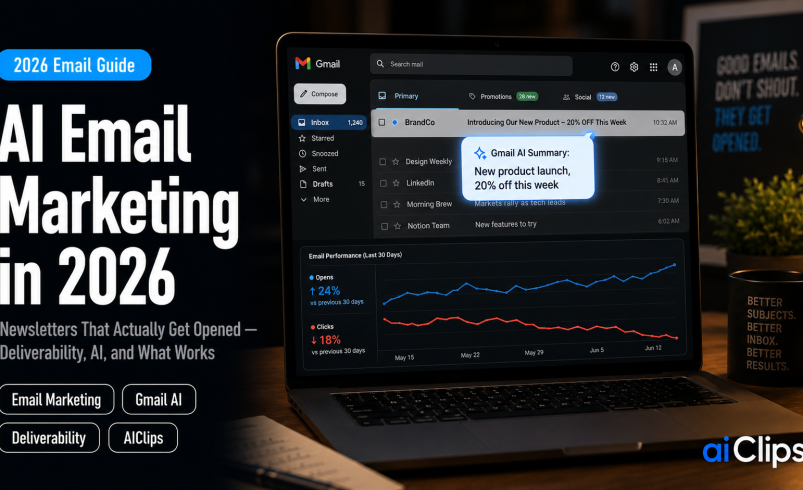

Your email now goes to an algorithm before it goes to a person. Gmail’s AI reads it, summarises it, and decides how prominently to surface it — and Gmail is somewhere between a quarter and a third of all email opens globally. That changes what email marketing has to do to work. It also broke the metric everyone reports on, because those AI summaries generate automatic opens that inflate your open rate while actual clicks fall. This guide covers what genuinely works now: the deliverability rules that will bounce you outright if ignored, where AI helps, and where it quietly destroys your sender reputation.
The most important shift in email marketing is that more emails is no longer a strategy. AI has made passable personalisation almost free, which means volume has stopped being an advantage and relevance has become the only one.
| The AI inbox | Gmail’s AI summarises your email before a human sees it, judging whether it deserves attention — not just whether it is spam. |
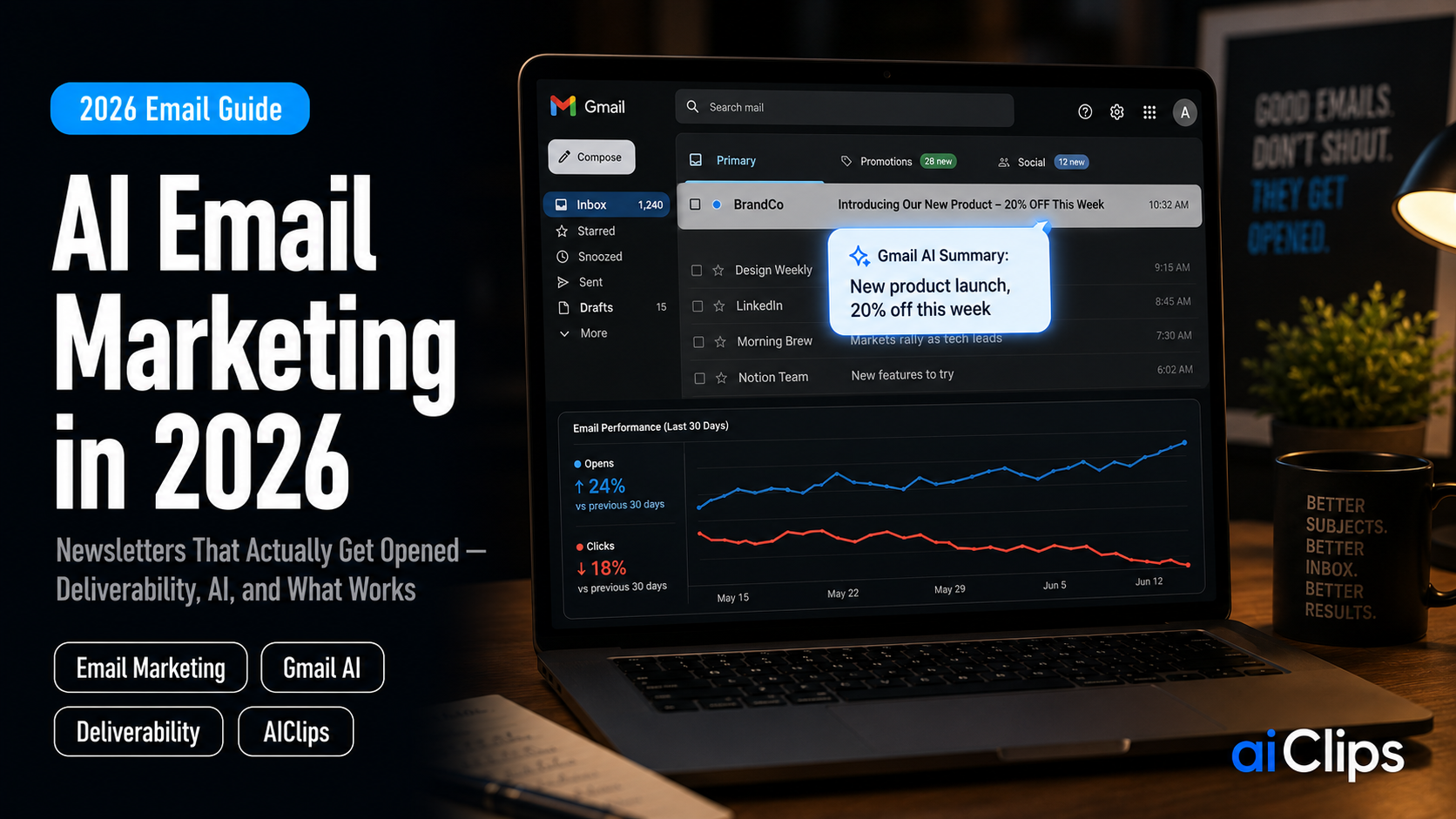
| Your open rate lies | AI auto-opens inflate opens. One analysis saw opens rise to 45.6% while clicks fell from 4.35% to 3.93%. |
| Hard enforcement | Since November 2025 Gmail permanently rejects non-compliant bulk mail with 5xx errors, rather than filtering it to spam. |
| The thresholds | 5,000+ daily sends to Gmail needs SPF, DKIM and DMARC, one-click unsubscribe, and spam complaints under 0.10%. |
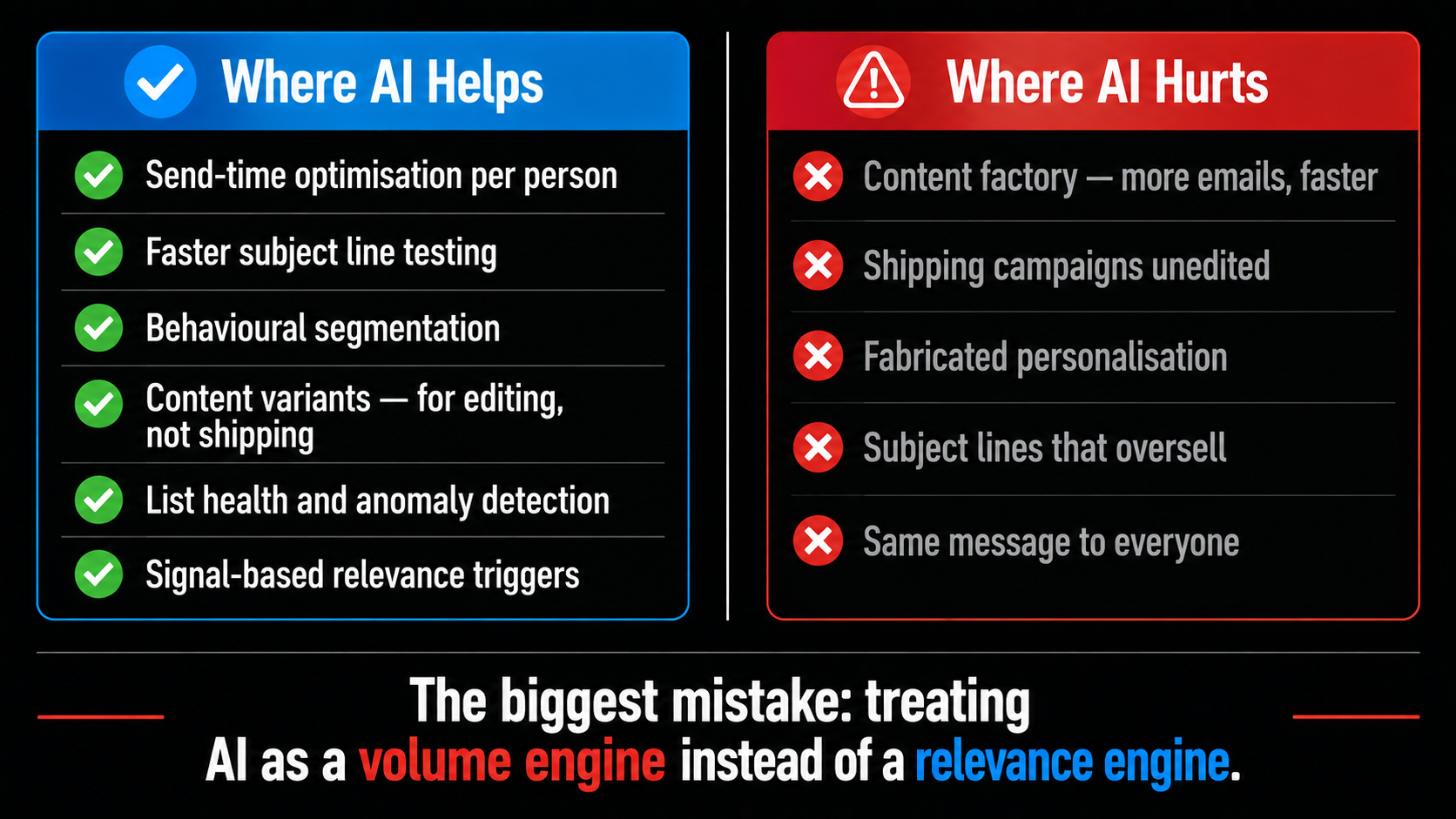
| The big mistake | Using AI as a content factory. Sending more, faster, buries your subscribers and your reputation at the same time. |
The Inbox Has an AI Gatekeeper Now
Gmail’s Gemini integration put an AI system directly inside the inbox of billions of users, and email marketing has to account for it. It reads incoming mail, writes summaries, suggests tasks, and decides what deserves a priority position. The practical meaning for email marketing is that you are no longer writing only for a human and a spam filter. You are writing for a semantic gatekeeper that asks a harder question than the old filters did.
The old email marketing test was “is this spam?” The new test is “is this worth this person’s attention?” The AI weighs things like whether you are in the recipient’s contacts, whether they have replied to you before, whether similar users engage with you, and what type of content this appears to be. One analysis found that up to 40% of emails that technically reach a Gmail inbox are being deprioritised by AI filtering — which means traditional inbox placement rates are now misleading, and simply landing in the inbox is not the win it used to be.
Take a breath, though, because this is not the end of email marketing. It is a sharper version of the test your emails always faced. Senders who were already relevant, wanted, and specific are mostly fine. Senders who relied on volume are the ones in trouble.
Your Open Rate Is Now Partly Fiction
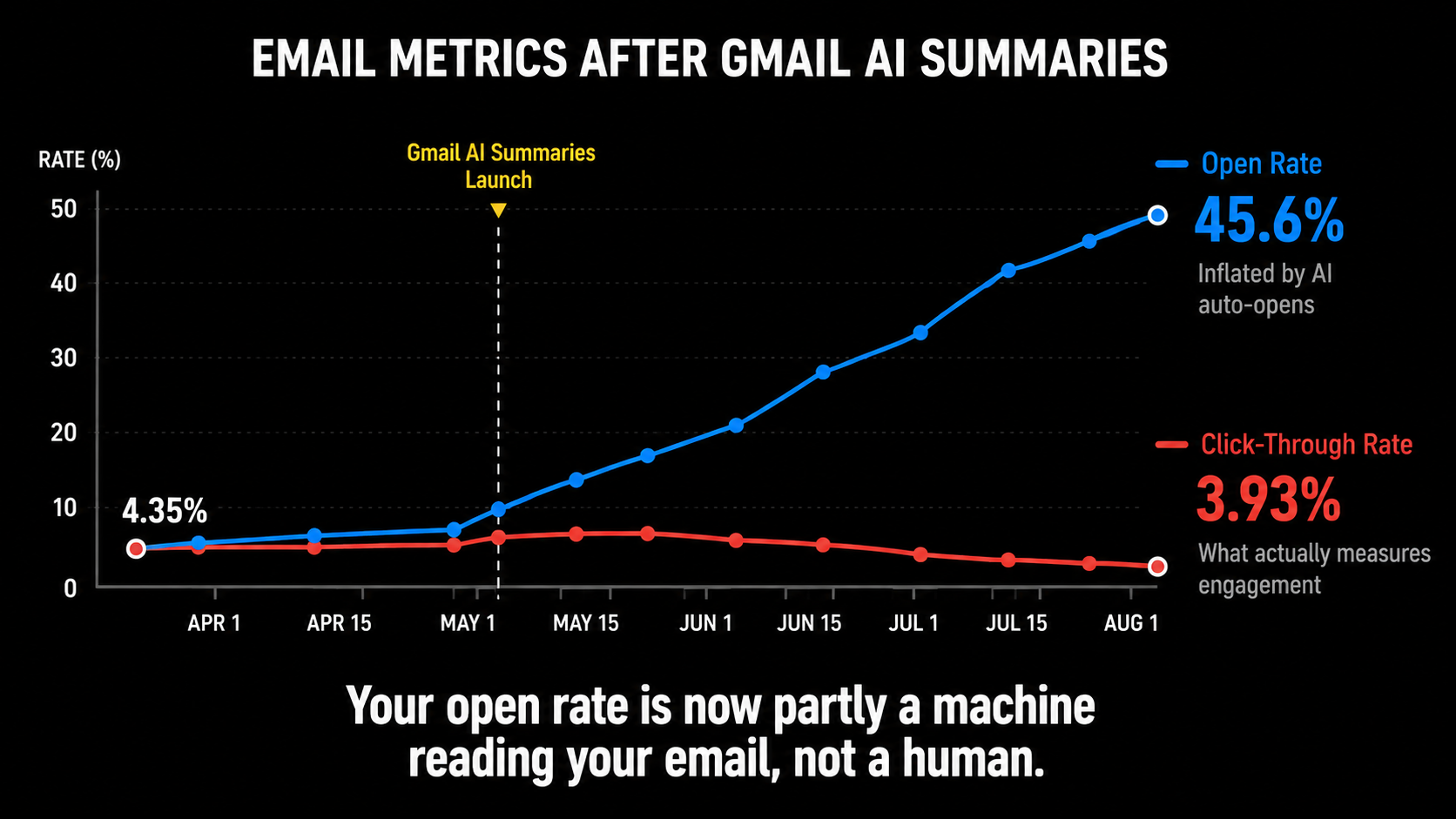
There is a strategic email marketing consequence worth sitting with. If the AI summary is what many subscribers actually read, then your email needs to survive being compressed. The key point has to be near the top, stated plainly, with one obvious action. A newsletter whose value only emerges in paragraph six will be summarised into nothing.
The Deliverability Rules You Cannot Ignore
In email marketing these are not best practices any more. They are entry requirements, and the enforcement is now unforgiving.
| Requirement | The detail |
|---|---|
| Authentication | SPF or DKIM for all senders; SPF, DKIM and DMARC together at 5,000+ daily messages to Gmail |
| One-click unsubscribe | Required in marketing mail for bulk senders, via the proper header standard |
| Spam complaint rate | Stay under 0.10% in Postmaster Tools; enforcement kicks in around 0.30% — roughly 3 complaints per 1,000 sends |
| Hard rejection | Since November 2025 Gmail issues permanent 5xx rejections for non-compliant bulk mail rather than filtering to spam |
| Warm-up | New domains and inboxes must ramp gradually; sudden volume spikes are penalised |
| Monitoring | Watch Google Postmaster Tools and Microsoft SNDS, or you are flying blind on reputation |
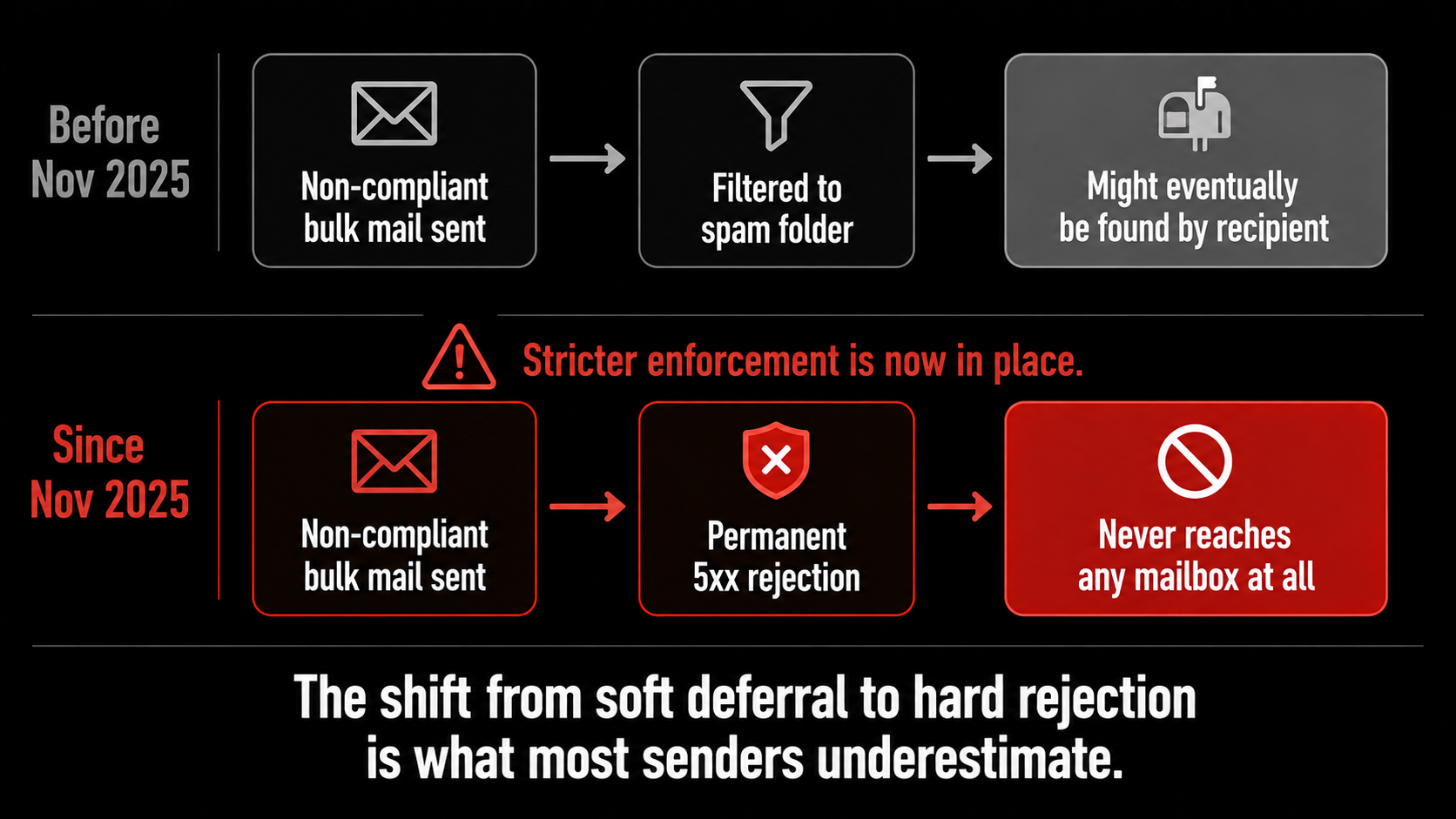
Gmail and Yahoo began enforcing bulk sender requirements in February 2024, and Microsoft matched them for Outlook, Hotmail and Live addresses from May 2025. Between the three, that covers nearly everyone on your list. For email marketing, the shift from soft deferrals to hard rejection is the part people underestimate: a non-compliant campaign no longer lands in a spam folder where someone might eventually find it. It bounces before it reaches any mailbox at all.
Where AI Genuinely Helps
Used in the right places, AI improves email marketing materially. These are the applications with real evidence behind them.
1. Send-Time Optimisation TIMING
Predicting the best send time per individual or segment, rather than picking one hour for your whole list. This is a genuine machine-learning strength and it needs no creative judgement from you, which makes it one of the safest wins available.
2. Faster Subject Line Testing TESTING
AI can run test cycles faster than human-led A/B testing manages. Worth doing — but keep expectations honest, because subject line tests are easy and rarely move revenue much on their own. Do them, then spend your real energy on offer and segmentation.
3. Behavioural Segmentation SEGMENTS
This is where the money is. AI groups subscribers by actual behaviour rather than crude demographics, so a first-time buyer and a lapsed regular get genuinely different messages. Relevance protects your sender reputation across the whole list, not just the segment you are mailing.
4. Content Variants for Testing DRAFTS
Generate variations to test — not to ship unedited. AI is a drafting engine here, giving you five angles to choose between instead of a blank page. The human edit before sending is not optional; it is the whole reason the output is usable.
5. List Health and Anomaly Detection HYGIENE
Spotting deliverability drift, rising complaint patterns, and dead segments before they damage your reputation. Given how punishing the 2026 thresholds are, an early warning on list health is worth more than any clever subject line.
6. Signal-Based Relevance TRIGGERS
Instead of merging a first name, use real trigger events — a pricing page visit, a new hire, a funding announcement, an abandoned cart. Timing and genuine relevance are what earn a reply now that surface-level personalisation is free for everyone.
Where AI Will Hurt You
The email marketing failure modes are as well documented as the wins, and they are worth naming individually because each one is tempting.
- Treating AI as a content factory. The single biggest mistake in 2026 email marketing. Generating more emails faster buries your subscribers and your sender reputation simultaneously.
- Shipping entire campaigns unedited. AI drafts; you approve. Unreviewed sends are how brand-damaging errors reach thousands of people at once.
- Fabricated personalisation. Personalisation not grounded in real data reads as creepy or wrong, and either reaction costs you more than generic copy would have.
- Subject lines that oversell. A subject promising something the body does not deliver earns complaints, and complaints are the metric that gets you rejected.
- Sending the same message to everyone. Identical mass mail is a reliable route to the spam folder now, because engagement signals collapse.
What a Good Email Looks Like Now
Practical, boring, effective email marketing advice, most of which cuts against instinct. Send plain text or light HTML rather than heavy image-led templates, because simpler formatting trips fewer filters. Keep first-touch messages short — benchmark data on top-performing campaigns puts the sweet spot under 80 words. Put the point and the single call to action near the top so the message survives AI summarisation. For sequences, four to seven emails is the reported sweet spot rather than an endless drip.
Clean Your List, Even When It Hurts
In email marketing the instinct is to protect list size, because a bigger number feels like a bigger asset. In 2026 that instinct is expensive. Unengaged subscribers drag down the engagement signals that determine your visibility with everyone else on the list, and unverified addresses bounce, which damages reputation directly.
So verify your list with a validation step and remove what does not pass. Suppress subscribers who have not engaged in months. This is not about shrinking your audience; it is about protecting the deliverability of the people who actually want to hear from you. In email marketing, a smaller list that reliably reaches the primary inbox is worth far more than a large one being quietly deprioritised.
The Metrics to Track Instead
| Stop trusting | Start tracking |
|---|---|
| Open rate as a success metric | Clicks, replies, conversions and revenue per send |
| Raw list size | Engaged subscribers and engagement rate by segment |
| Basic inbox placement | Whether mail lands in a visible, priority position |
| Send volume | Spam complaint rate and domain reputation trend |
Industry forecasts expect click-through to keep climbing while open rates stay suppressed, precisely because privacy filtering and AI processing have broken opens as a measure. That is a healthy shift: it pushes email marketing toward intent and behaviour rather than curiosity clicks on a clever subject line.
For Indian Businesses
There is an email marketing channel decision worth making deliberately here. In India, email marketing is strongest for B2B, SaaS, education, and considered purchases, while WhatsApp usually beats it for B2C retail and quick transactional nudges, since that is where consumers actually live. Running both without thinking is how businesses annoy the same customer twice; the better approach is email for depth and documentation, WhatsApp for immediacy. Our guide to the Indian AI ecosystem has more on the local tooling side.
On compliance, India’s Digital Personal Data Protection Act, 2023 expects clear consent, a defined purpose, and secure handling of subscriber data — which sits neatly alongside the deliverability rules, since both reward permission-based sending. That is general information rather than legal advice, so confirm your obligations for your own situation. And for festive periods, the temptation to blast the whole list is exactly the behaviour that raises complaints, so segment harder when volume rises, not less.
Where AIClips Fits
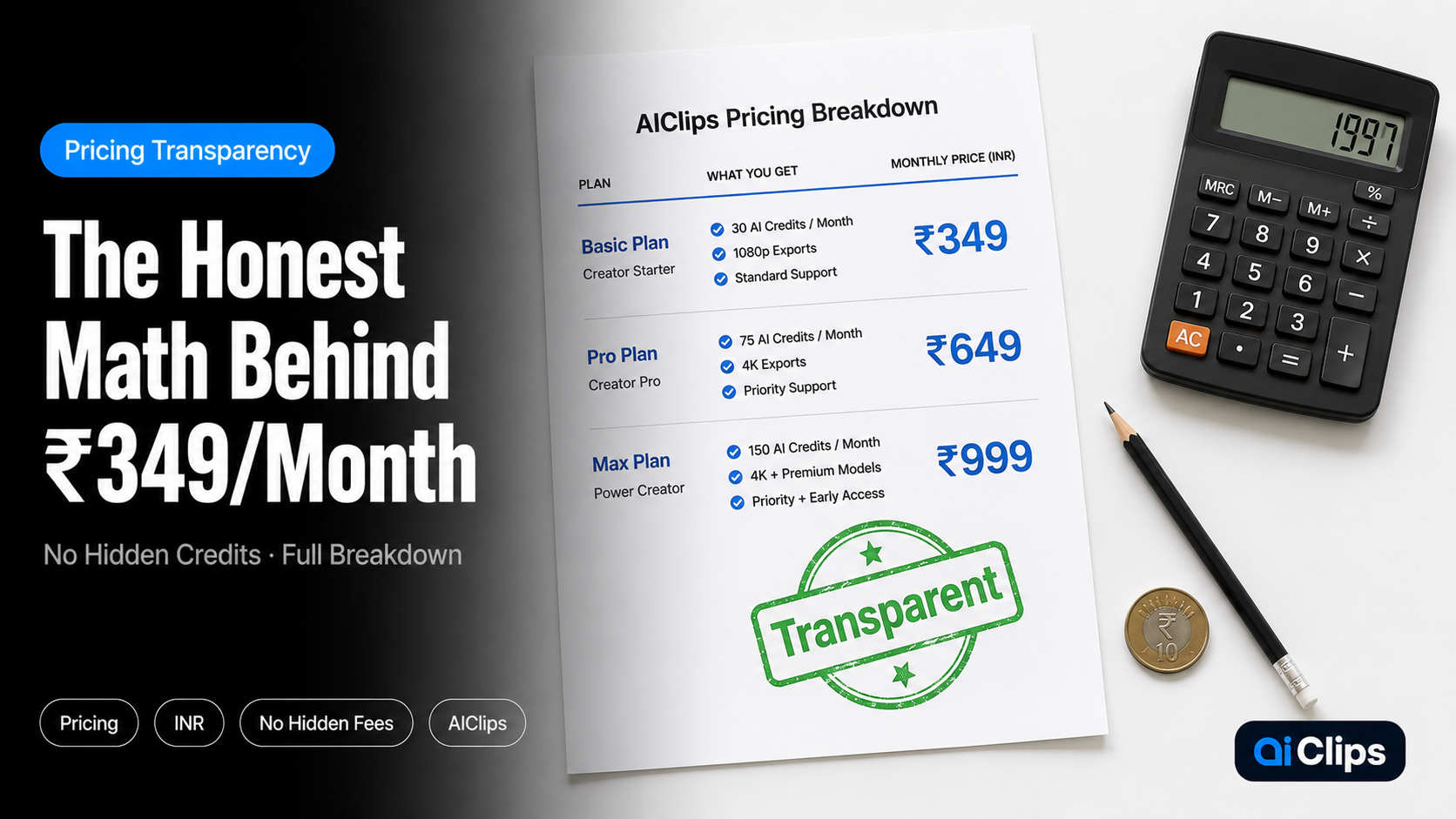
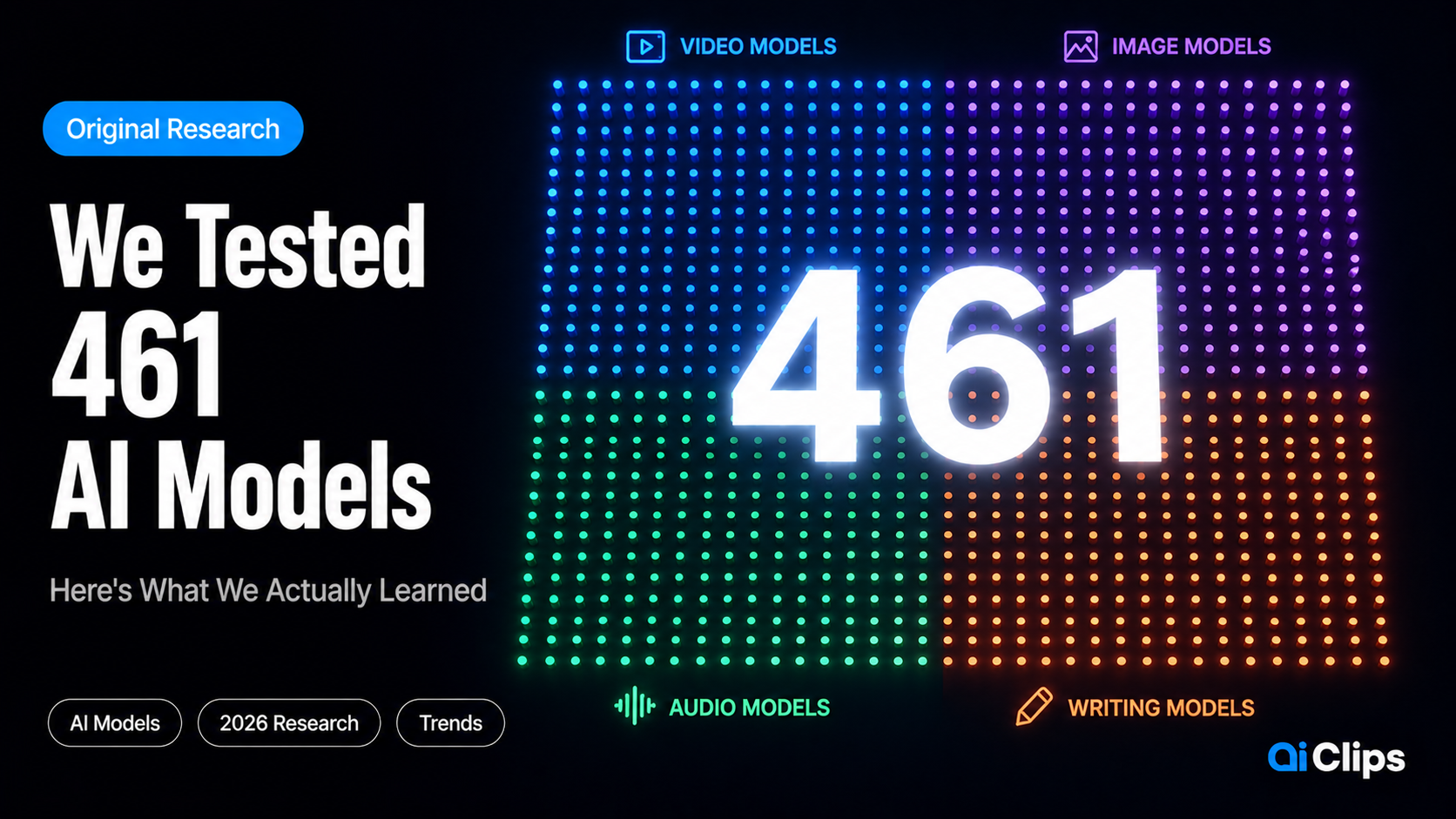
Being exact about our lane in email marketing: AIClips is not an email service provider. It does not send campaigns, manage lists, handle authentication, or report deliverability — for that you need a proper platform, and you need to configure SPF, DKIM and DMARC properly regardless of what tools you use elsewhere. What AIClips does is produce the visual content your email marketing needs: header and hero images, product visuals, festive creatives, and video thumbnails for the campaigns where imagery genuinely sells something, across 461 models in one dashboard at ₹349/month with UPI.
And I will repeat the honest email marketing caveat from earlier, even though it argues against using more of our output: email is one channel where restraint with visuals often helps deliverability. Use strong imagery where it does a job, keep it light, and let the words carry the rest.
The Bottom Line
None of this makes email marketing harder for good senders. It makes it harder for lazy ones, and those are very different problems. Get the plumbing right — authentication, one-click unsubscribe, a complaint rate well under the threshold, gradual warm-up, and reputation monitoring — and you have cleared the bar most senders trip over.
Then use AI where it has real leverage: timing, segmentation, test variants, and list health. Keep it away from the places it does damage: unedited campaigns, invented personalisation, and sheer volume. Write emails that survive being summarised by putting the point and the action at the top. Clean your list even when the number drops. And measure clicks, replies and revenue rather than an open rate that now counts machines as readers.
Done that way, email marketing remains one of the highest-return channels a business owns, because unlike social reach, the list belongs to you.
Frequently Asked Questions
Why did my open rate go up but clicks go down?
What are the 2026 bulk sender requirements?
Is email marketing dead because of AI inboxes?
How should I use AI in email without hurting deliverability?
Should I use image-heavy email templates?
Does AIClips send email campaigns?
Create Your Campaign Visuals on AIClips
Header images, product visuals, and festive creatives for your campaigns — 461 models in one dashboard. From ₹349/month.
Start on AIClips →